

Innovation
How to complete your crypto transaction?
Start your crypto journey by mastering the first transaction—discover the crucial steps you can't afford to miss before making your move.


Technology is everywhere. It’s in the smartphones we carry, the video games we play, the smart devices in our homes, and the apps that manage nearly every part of modern life. But while these everyday technologies capture most of the headlines, the real revolutionary power of innovation is happening somewhere far quieter, far more meaningful — in assistive technology.
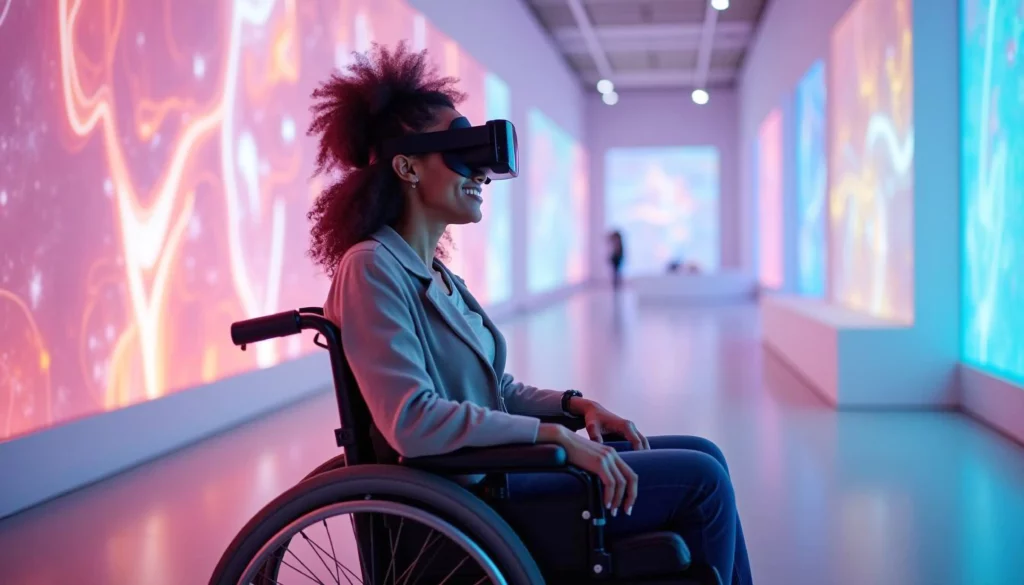
This field isn’t about convenience or entertainment. It’s about access, dignity, equity, and true inclusion. Assistive technology transforms the lives of millions of people with disabilities, not by offering small improvements but by unlocking entirely new ways to learn, communicate, work, and connect. For someone who has lived a lifetime facing barriers, assistive technology can be nothing short of life-changing.
Often unnoticed by the general public, this quiet revolution is reshaping what it means to participate fully in society. And its impact grows every day.
Imagine waking up in a world that wasn’t designed for you. Imagine spaces where signs can’t be read, screens can’t be seen, conversations can’t be heard, and tools can’t be used the way they were intended. For many people with disabilities, this is not an abstract scenario — it is their daily experience.
Assistive technology exists to dismantle these barriers.
It takes challenges that might otherwise isolate people and replaces them with pathways, tools, and bridges. It turns exclusion into participation. And most importantly, it grants people with disabilities the opportunity to live with independence, autonomy, and confidence.
Where traditional design excludes, assistive technology adapts.
Where society overlooks, assistive technology empowers.
Where obstacles exist, assistive technology creates opportunities.
This shift does more than help individuals — it enriches society as a whole. When more minds, voices, and perspectives are included, innovation accelerates, workplaces become stronger, and communities become more human.
Assistive technology is not a luxury. For many, it is essential for daily life, education, work, and social connection. Let’s explore some of the most impactful tools across different disability communities.
Technology has opened doors that were once unimaginable. Among the most important tools are:
Software like NVDA, VoiceOver, and JAWS read aloud everything displayed on a computer or smartphone screen. This allows users to:
What many people take for granted — reading text on a screen — becomes fully accessible through synthesized speech.
These devices translate digital text into refreshable Braille that a user can touch and read with their fingertips. This creates a tactile bridge between the digital world and the physical sense of touch. For those who rely on Braille as a primary reading method, these displays are life-changing, offering:
Together, screen readers and Braille technology ensure that visual impairment does not limit access to knowledge or opportunity.
Assistive technology has transformed how people with hearing impairments communicate, participate socially, and engage in education or work.
Also known as CART (Communication Access Realtime Translation), this technology displays spoken words as text on a screen instantly. It is invaluable during:
This ensures no one misses essential information simply because they cannot hear it.
VRS allows deaf users to make phone calls using a sign language interpreter who relays the conversation in real time. This enables:
Combined with modern apps and high-speed internet, VRS gives deaf users communication freedom previously unavailable.
Mobility challenges can make even simple tasks feel impossible — but assistive technology provides powerful alternatives.
People who cannot use a traditional mouse or keyboard can rely on:
These allow users to type, navigate websites, control apps, and communicate entirely hands-free.
Today’s wheelchairs are more than mobility tools; they integrate:
Meanwhile, exoskeletons — wearable robotic frameworks — allow some individuals with limited mobility to stand or walk, offering not just mobility but therapeutic benefits and psychological empowerment.
Assistive technology is evolving at a pace never seen before. Artificial intelligence, machine learning, robotics, and cloud computing are unlocking a new era of inclusion — one defined by personalization and adaptability.
Here are some of the most promising advancements shaping the future:
Speech-generating devices are becoming more intuitive, predicting what a user wants to say based on past patterns. This speeds up communication dramatically for people with speech impairments.
Voice assistants and IoT devices allow people with disabilities to control:
—all with voice commands, gestures, or automated routines. What once required physical strength or coordination now takes only a word or a tap.
VR environments are being used for:
These virtual spaces are safe, controlled, and customizable, making them ideal learning environments.
Technology is often praised for its power to entertain or impress, but its greatest impact lies in its ability to empower. Assistive technology is built on empathy — the understanding that everyone deserves equal access to the world.
It proves that innovation is not just about the next big gadget. It’s about dignity, independence, and opportunity.
When technology serves humanity, everyone wins. And as assistive tools continue to evolve, they will redefine what is possible, not just for people with disabilities but for society as a whole. Because a world designed for everyone is a world that becomes stronger, smarter, and more compassionate.


Isabela Souza is an administration professional specializing in operational efficiency and the logic of digital systems. With a highly analytical mindset, she focuses on deconstructing complex technical data into well-structured and actionable information. At ABWavesTech, Isabela applies her expertise in management to organize intricate tech trends and guides, ensuring that readers have access to clear, precise, and reliable insights to help them navigate the modern digital ecosystem.
Start your crypto journey by mastering the first transaction—discover the crucial steps you can't afford to miss before making your move.

Unlock the secrets of seamless cryptocurrency transactions—understand every crucial step before you risk your first coin. Discover what most beginners miss.

Here are the most secure platforms to buy cryptocurrency online—discover which one keeps your assets safest before you make your next move.

Unlock the secrets to easily transforming your digital art into tokens—discover what you need to know before making your first move.

Premium digital collectibles aren’t always easy to spot—prepare to discover five expert tips that could change the way you collect forever.

From energy-hungry blockchains to surprising climate costs, find out how NFTs could be shaping our planet’s future in unexpected ways.