Published on October 19, 2025 at 11:00 AMUpdated on October 19, 2025 at 11:00 AM
The quest for the perfect television has become increasingly complex as the technology powering our home entertainment systems advances at a breakneck pace. We are no longer simply buying a box that receives a broadcast signal; we are selecting a sophisticated computer with a high-fidelity display that serves as the centerpiece of our digital lives. Finding the perfect TV model requires a holistic approach that balances physical dimensions, the physics of light, digital processing power, and ergonomic software design. Whether you are a hardcore gamer requiring low latency, a cinephile seeking perfect black levels, or a casual viewer who wants a bright screen for daytime sports, the decision-making process must be deliberate and informed.
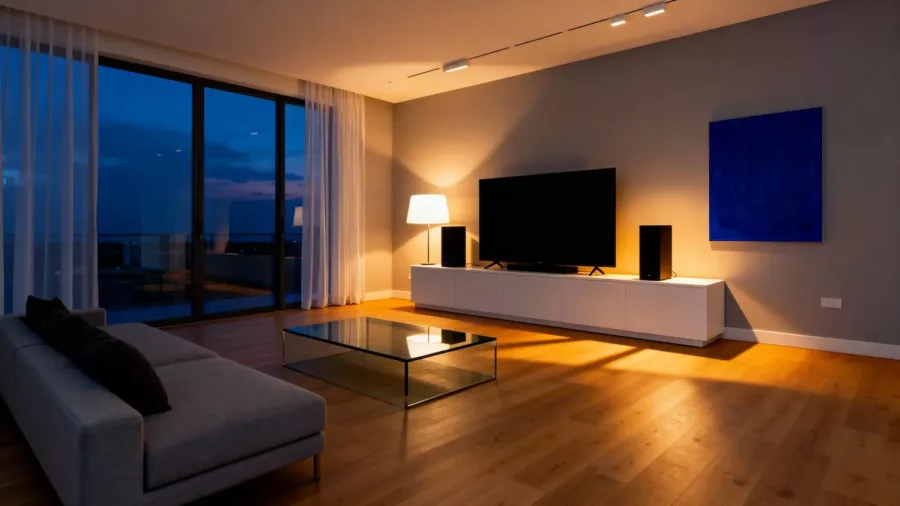
When searching for the best TV model, don’t forget to check connectivity options and sound quality. (Image:ABWavesTech)
Determining Your Ideal Screen Size and Viewing Geometry
One of the most common mistakes consumers make is choosing a screen size based solely on the available wall space or a “bigger is better” mentality. However, the perfect TV model is one that fits the specific geometry of your room. To determine the ideal size, you must consider the relationship between the screen’s diagonal length and your seating distance.
Industry standards, such as those provided by THX and the Society of Motion Picture and Television Engineers, suggest that for a 4K resolution screen, the ideal viewing distance is between 1 and 1.5 times the screen’s vertical height. Alternatively, a simpler rule of thumb for 4K TVs is that the TV should occupy approximately 30 to 40 degrees of your field of vision. For example, if you sit about 8 feet from your television, a 65-inch or 75-inch screen is often the sweet spot. If the screen is too small, your eyes will be unable to distinguish the fine details that 4K resolution provides; if it is too large and you sit too close, you may experience eye fatigue or be able to see the individual pixel structure.
Furthermore, the height at which the TV is mounted is just as important as the size. The perfect TV model should be positioned so that your eyes are level with the center of the screen when you are seated. Mounting a TV too high—commonly known as the “fireplace mistake”—can lead to neck strain and distorted colors, as many display technologies lose accuracy when viewed from an extreme vertical angle.
Deep Dive into Display Technology: LED, OLED, and QLED
Choosing the right display technology is arguably the most technical part of the selection process. This decision dictates how the TV produces light and color, which in turn defines the contrast ratio and overall “pop” of the image.
LED-LCD technology remains the most common and versatile. These TVs use a liquid crystal layer to block or allow light from a backlight. Modern high-end LED TVs use “Full Array Local Dimming” where hundreds of small LEDs behind the screen can be turned off independently. This allows for bright highlights and relatively deep blacks. However, LED TVs can sometimes suffer from “blooming,” where light from a bright object leaks into the surrounding dark areas.
OLED, or Organic Light Emitting Diode technology, is the gold standard for many enthusiasts. Unlike LED TVs, OLED pixels are self-emissive, meaning they produce their own light. When a pixel needs to show black, it simply turns off completely, resulting in an infinite contrast ratio. This makes OLED the perfect TV model for dedicated home theaters or dark rooms. The main trade-off is that OLEDs generally cannot reach the same peak brightness levels as top-tier LED TVs, and there is a theoretical risk of “burn-in” if static images are left on the screen for thousands of hours.
QLED technology, pioneered largely by Samsung, is a sophisticated evolution of the LED-LCD. It adds a layer of Quantum Dots—microscopic particles that glow with specific colors when hit by light—to the backlight system. This allows for significantly higher brightness and a wider color volume. QLED is the ideal choice for bright living rooms with lots of windows, as the sheer luminance can easily overcome glare. In recent years, we have seen the emergence of QD-OLED, a hybrid that combines the perfect blacks of OLED with the vibrant colors of Quantum Dots, representing perhaps the most advanced display technology currently available.
Deciphering Resolution, HDR, and Picture Processing
While 4K resolution is now the standard for almost every TV above 43 inches, understanding what those pixels actually do is vital. Resolution refers to the pixel density—3840 by 2160 pixels for 4K. While 8K TVs exist, the human eye often struggles to see the difference at standard viewing distances unless the screen is massive.
The real hero of modern picture quality is High Dynamic Range (HDR). HDR allows the TV to display a much wider range of brightness and color. There are several formats to look for, including HDR10, HLG, and the more advanced “dynamic” formats like Dolby Vision and HDR10+. Dynamic HDR formats provide instructions to the TV on a frame-by-frame basis, ensuring that a dark, moody scene in a cave and a bright, snowy mountain peak are both rendered with maximum detail.
However, raw specs are only half the story. The perfect TV model must have a powerful “brain” or image processor. Brands like Sony, LG, and Samsung use proprietary AI algorithms to handle motion interpolation (smoothing out fast-moving action), noise reduction (cleaning up grainy footage), and upscaling (making non-4K content look sharp). For sports fans, a TV with excellent motion handling is essential to prevent the “soap opera effect” while ensuring the ball doesn’t look like a blurry streak across the field.
Evaluating Smart TV Features and Operating Systems
In 2025, your TV’s operating system (OS) is your primary gateway to entertainment. The perfect TV model should offer an interface that feels snappy, intuitive, and free of excessive advertising.
Android TV and Google TV are highly praised for their massive app libraries and excellent voice search capabilities via Google Assistant. Roku TV is the favorite for those who value simplicity and a “no-nonsense” grid of apps. LG’s webOS uses a unique “Magic Remote” that acts like a Nintendo Wii controller, allowing you to point and click on the screen, which many find faster than using a directional pad. Samsung’s Tizen OS offers deep integration with smart home devices, allowing you to view your doorbell camera or control your lights directly from your TV.
When exploring these features, consider the longevity of the software. Some manufacturers are better than others at providing updates years after the TV was purchased. A TV that stops receiving app updates after three years will eventually require you to buy an external streaming stick, somewhat defeating the purpose of a “Smart” TV.
The Importance of Connectivity: HDMI 2.1 and Beyond
The back of your TV is just as important as the front. To find the perfect TV model for modern gaming consoles like the PlayStation 5 or Xbox Series X, you must look for HDMI 2.1 ports. This specific standard supports high-bandwidth features like 4K at 120Hz, Variable Refresh Rate (VRR), and Auto Low Latency Mode (ALLM). Without these, your gaming experience will be limited to lower frame rates and potential screen tearing.
Beyond gaming, you should ensure the TV has an eARC (Enhanced Audio Return Channel) port. This allows the TV to send high-quality, uncompressed audio—like Dolby Atmos—to a soundbar or home theater receiver through a single HDMI cable. Other ports to check for include USB 3.0 for playing local media files, an Ethernet port for a stable wired internet connection, and an optical audio out for older sound systems. In a world where we have more devices than ever, having at least four HDMI ports is highly recommended to avoid the constant swapping of cables.
Balancing Internal Sound Quality with External Solutions
As TVs have become thinner, the space available for high-quality speakers has vanished. Most modern televisions use tiny, downward-firing drivers that often produce tinny, muffled audio. However, some flagship models have innovated in this space. For example, some high-end sets use the screen itself as a speaker (Acoustic Surface technology) or include integrated soundbars at the base.
When evaluating the perfect TV model, check for audio processing features like “Clear Voice” for better dialogue or “Object Tracking Sound” which makes the audio seem to move with the action on screen. However, for a truly cinematic experience, you should factor an external sound system into your budget. Even a budget-friendly 2.1 channel soundbar will almost always outperform the internal speakers of a $2,000 television. If you plan to use an external system, ensure the TV supports the audio pass-through formats you need, such as DTS:X or Dolby Atmos.
Budgeting Strategy and Comparing Model Tiers
The television market is divided into clear tiers: entry-level, mid-range, and flagship. Setting a budget helps you decide which “compromises” you are willing to make.
In the entry-level tier, you are usually getting a standard LED screen with basic HDR. These are great for bedrooms or casual viewing. The mid-range is where competition is fiercest; here you will find high-quality QLEDs and entry-level OLEDs that offer significantly better brightness and contrast. The flagship tier is where the latest innovations live—8K resolution, QD-OLED panels, and the most powerful AI processors.
When comparing models within your budget, don’t just look at the manufacturer’s suggested retail price (MSRP). TV prices fluctuate wildly throughout the year, with significant drops occurring during Black Friday, the Super Bowl, and when the new year’s models are announced in the spring. A last-year “flagship” model on sale is often a better value than a brand-new “mid-range” model at full price.
Conclusion
Finding the perfect TV model is a journey that requires you to assess your environment, your content habits, and your technical requirements. By measuring your room to find the ideal screen size, choosing a display technology that matches your lighting conditions, and ensuring you have the right connectivity for your devices, you can move forward with confidence.
Remember that the “perfect” TV is a subjective choice. A movie lover may insist on the perfect blacks of an OLED, while a sports fan in a sunlit room may prioritize the searing brightness of a Neo QLED. A gamer will look at refresh rates above all else, while a minimalist may focus on the smart TV interface and wall-mounting capabilities. By treating the purchase as an investment in your home’s aesthetic and your daily comfort, you ensure that the model you choose will provide years of immersive, high-quality entertainment. The right TV doesn’t just show images; it creates an experience that brings family and friends together, making it one of the most important tech decisions you will make for your household.