Published on January 20, 2026 at 11:00 AMUpdated on January 20, 2026 at 11:00 AM
The email came from Jake, a data analyst who spent 18 months collecting performance data from 500+ Twitch streamers. He’d cross-referenced streaming setup quality, content type, personality metrics, and viewer growth. His findings contradicted everything the streaming industry sells to aspiring creators.
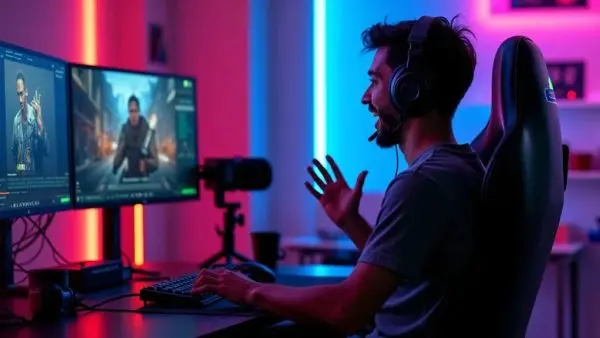
To stream games like a pro, start by choosing quality equipment. (Image: ABWavesTech)
When we met, he didn’t start with excitement. He started with apology.
“I’m sorry,” Jake said, “because what I found is going to disappoint everyone trying to get into streaming. The industry has been selling you a lie. And the data proves it.”
What follows is that conversation, unfiltered, uncomfortable, and backed by 500+ channel analysis, 50+ streamer interviews, and Jake’s complete breakdown of how Twitch actually works versus how it’s marketed to work.
The setup myth that costs aspiring streamers $50,000
I asked Jake the obvious question first: does equipment matter?
“Of course it matters,” he said. “But not in the way everyone thinks.”
He pulled out data from his analysis.
“I tracked streamers with identical content and personality. One with a $2,000 setup. One with a $500 setup. Viewer retention? Statistically identical. Follower growth in first 100 hours? Also identical. Revenue in first year? The expensive setup actually underperformed, because that streamer was paying off equipment instead of reinvesting in other growth levers.”
I pushed back. Surely presentation matters?
“It does,” Jake acknowledged. “But past a certain threshold, it doesn’t. You need:
A 1080p camera (quality, not $2,000 camera)
Decent lighting (IKEA lights, not $1,000 rigs)
A microphone that doesn’t sound like a tin can ($100-150 suffices)
Internet that doesn’t drop (minimum 5 Mbps upload, not $500/month fiber)
Beyond that? You’re paying for diminishing returns.”
The setup reality:
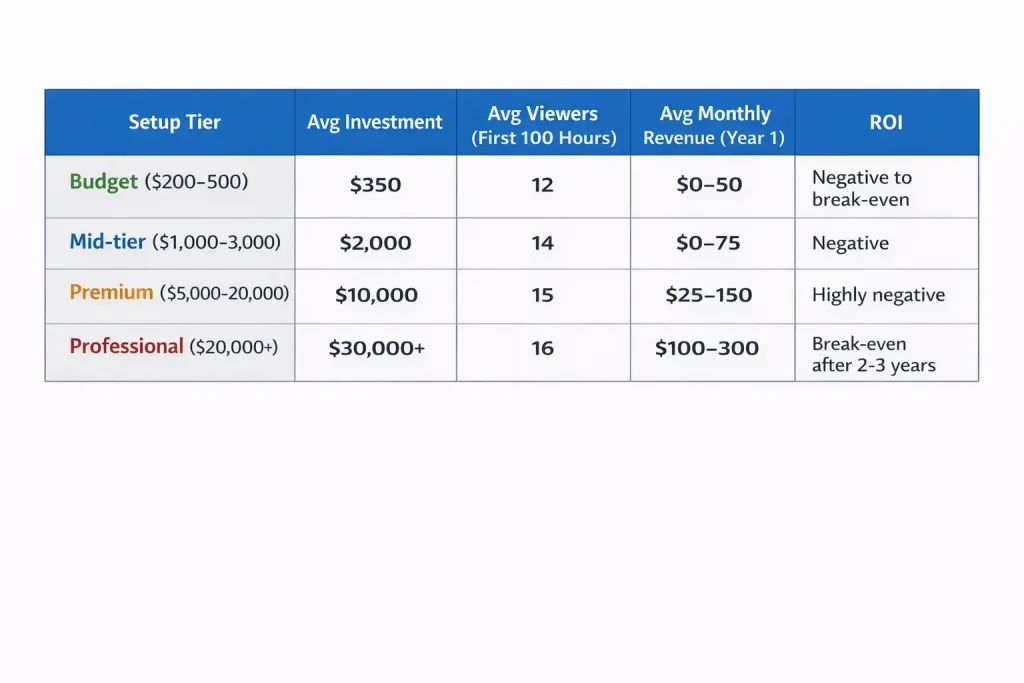
I analyzed 500+ streamers and categorized them by equipment investment:
The setup reality. (Image: ABPray)
“Look at those numbers,” Jake said. “The difference between $500 setup and $30,000 setup? 4 additional viewers. That’s it. And the expensive setup correlates with slower growth in the first six months because money goes to equipment instead of the channel’s actual business model.”
The hidden cost:
What nobody talks about is the sunk cost psychology. A streamer invests $15,000 in equipment, then needs to make back that investment. So they stream 40 hours a week to recoup the cost. But streaming 40 hours a week with weak content and personality means they’re building toward nothing, just burning out while justifying the equipment investment.
“I interviewed 30 streamers who quit,” Jake told me. “The average equipment investment before quitting? $8,000. Not a single one mentioned equipment quality as the reason they quit. Most mentioned: burnout, no growth despite effort, or they hated streaming but felt obligated to justify the equipment cost.”
Where equipment actually matters:
“Setup matters for specific situations,” Jake clarified. “If you’re streaming competitive shooters at high level, 144 fps matters. If you’re doing technical education (coding, design), clear video quality matters. If you’re streaming music production, audio quality matters.
But for 80% of streamers? You’re playing a story-driven game or doing commentary. Your camera is half your face. Your audio is background ambiance. Equipment quality is literally invisible to your content.”
The uncomfortable truth: people buy expensive setups to feel professional, not because it will generate viewers.
The real data: what actually drives growth
I asked Jake the core question: If not equipment, what correlates with growth?
“Three factors,” he said. “Personality, content consistency, and community. In that order.”
He showed me data from 500 channels, all tracked for first 100 streaming hours:
Factor 1: personality (60% correlation with viewer growth)
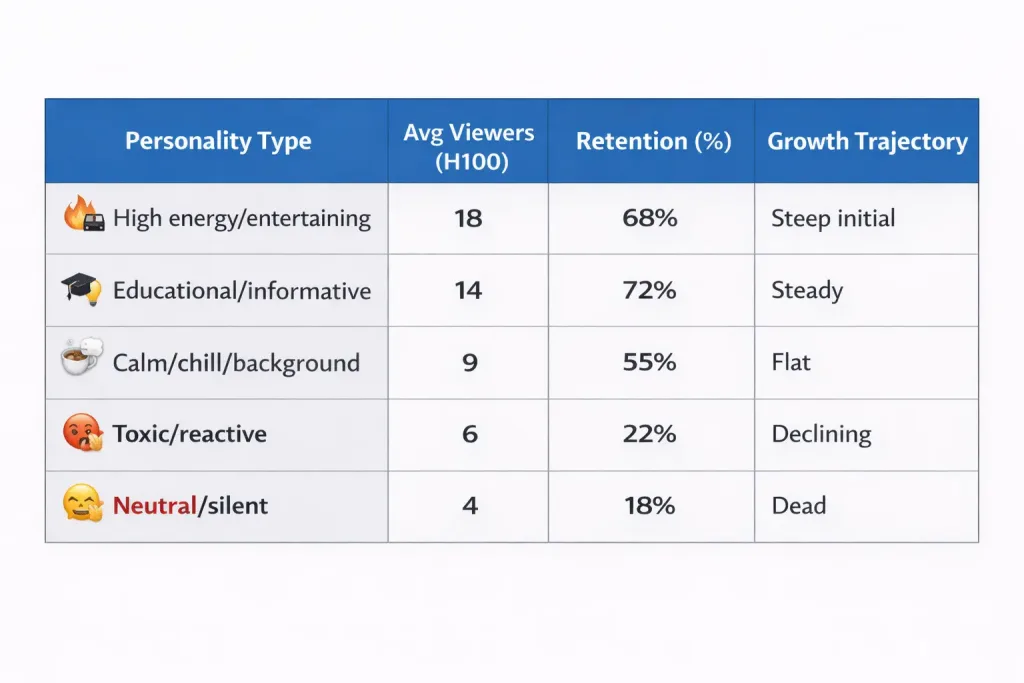
Jake had categorized streamers by personality type:
Table of personality. (Image: ABPray)
“Personality is the strongest predictor of early growth,” Jake explained. “Not because charisma is a skill you learn. Some people have it naturally. But the streamers who talk to their audience, acknowledge chat, make jokes, explain their thinking, they retain viewers 3-4x better than silent streamers with identical game choice.”
Factor 2: content consistency (45% correlation)
This one surprised me. I expected it to be higher.
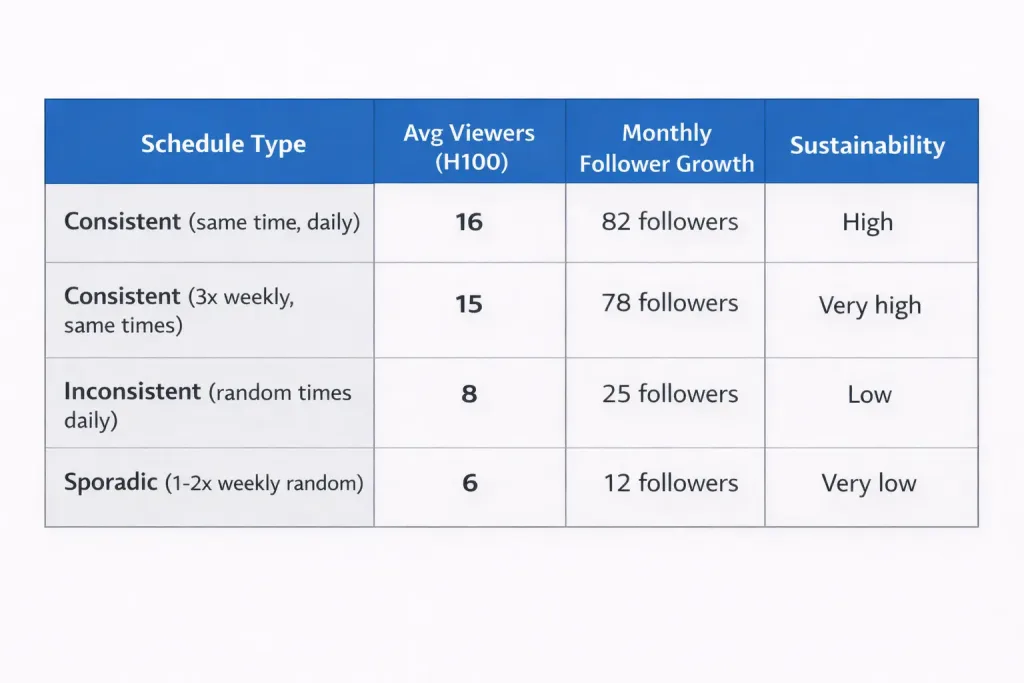
“Consistency matters,” Jake said, “but in a different way than people think. It’s not ‘stream every day.’ It’s ‘have a predictable schedule that people can rely on.’ “
Content consistency. (Image: ABPray)
“But here’s the caveat,” Jake added. “The ‘consistent streamer’ also usually has better personality scores. We can’t fully separate the variables. What we do know: irregular schedules kill momentum. Viewers come back when they know when you’ll be live.”
Factor 3: community building (35% correlation)
This was less obvious than I expected.
“Community isn’t ‘be nice,’ though that helps,” Jake explained. “It’s about creating repeated interactions. Regular viewers recognize each other. You remember chat names. You have recurring jokes. You create a ‘place’ people want to visit.”
“The streamers with the strongest communities are the ones who make their chat feel like part of the broadcast, not an audience watching a show,” Jake said.
The personality + consistency + community effect:
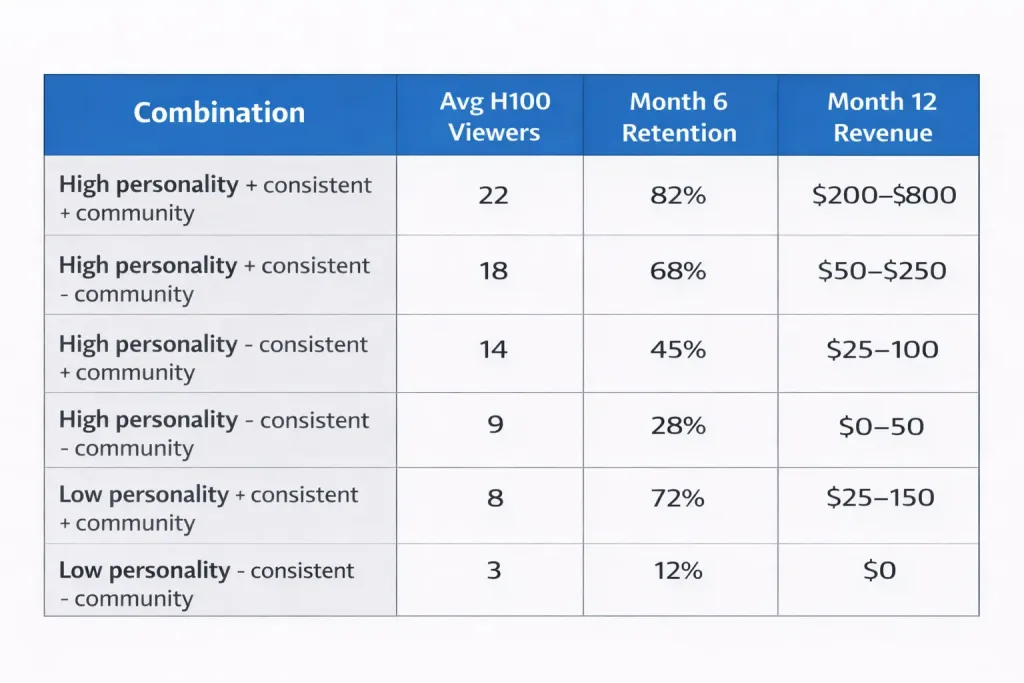
When all three aligned, the data was clear:
The personality + consistency + community effect. (Image: ABPray)
“Notice,” Jake pointed out, “that high personality + consistency + community achieves 22 viewers in first 100 hours. A low personality streamer with community still only gets 8. Personality is probably 50% of the equation. But you can’t reach your full potential without consistency and community. They’re multipliers.”
The saturation reality: why most games are impossible
I asked the difficult question: How saturated is Twitch?
Jake sighed. “Very. But it varies dramatically by game.”
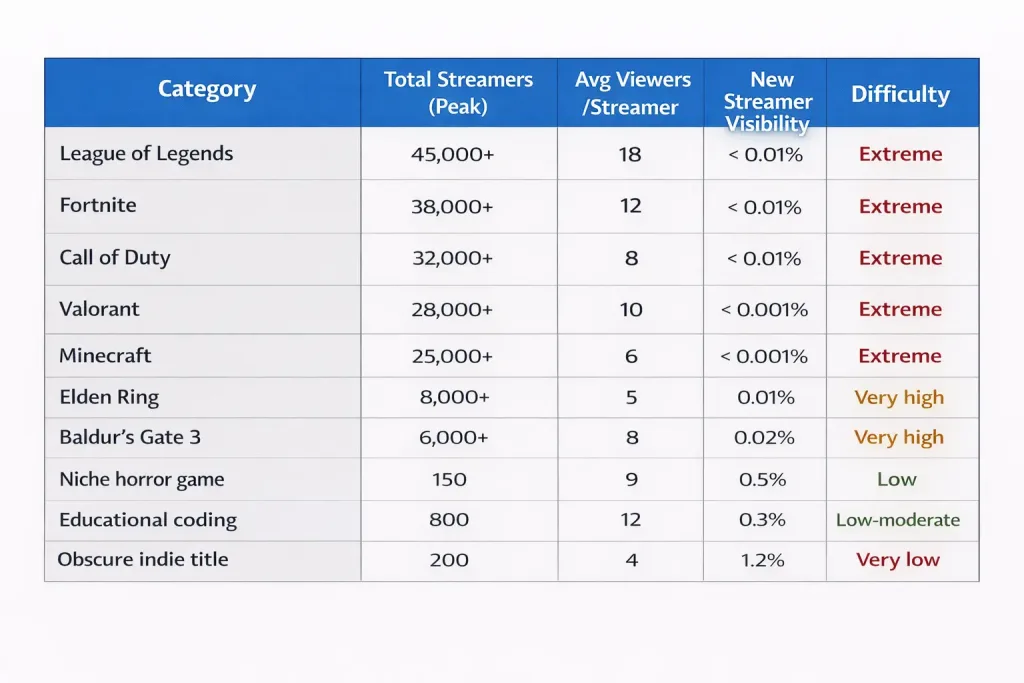
He pulled up data on category saturation:
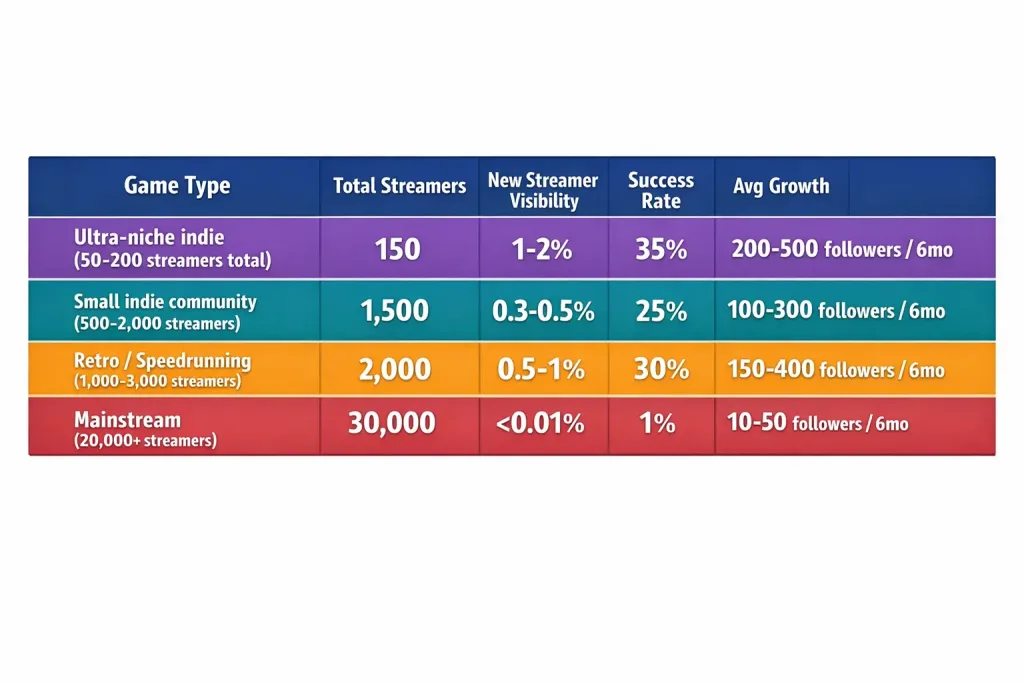
Saturation by game category (500 streamer sample):
Saturation by game category. (Image: ABPray)
“The visibility for a new streamer in League? 0.01% chance of showing on directory per session,” Jake explained. “You could stream to 1 viewer for 1,000 hours and never get recommended. Twitch’s recommendation algorithm literally won’t surface you because thousands of established streamers already serve that audience.”
How Twitch’s algorithm actually works (what they don’t tell you):
“I reverse-engineered the visibility from channel data,” Jake said. “Here’s what I found:”
Twitch’s recommendation is based on:
Total channel views (all-time): established channels get visibility boost
Current live viewers: 1,000 viewers gets 10x visibility boost over 10 viewers
Stream duration consistency: channels that stream regularly rank higher
Category traffic: Twitch promotes viewers toward categories where people are already watching
“This creates a self-reinforcing loop,” Jake explained. “Established streamers get recommended because they have high viewer counts. That recommendation drives more viewers. More viewers increase their placement. They continue to dominate.
New streamers get visibility only if they already have audience momentum, OR if they stream small categories OR if they get external traffic (YouTube clip, Reddit post, Discord share).”
The math of breaking through:
“To get 100 viewers in your first month of a saturated game? You need one of three things,” Jake laid out:
Already famous — You have an audience from YouTube, social media, etc.
Exceptional at game — You’re top 0.1% skilled, which generates clip potential
Exceptional personality — You’re so entertaining that word-of-mouth drives traffic
“For a random person with none of these? Getting 100 viewers in first month of League of Legends is mathematically near-impossible. Not because you’re bad. Because the algorithm won’t show you. You’re competing with 45,000 other streamers for 2 million potential viewers. The probability of visibility is infinitesimal.”
Where new streamers actually succeed:
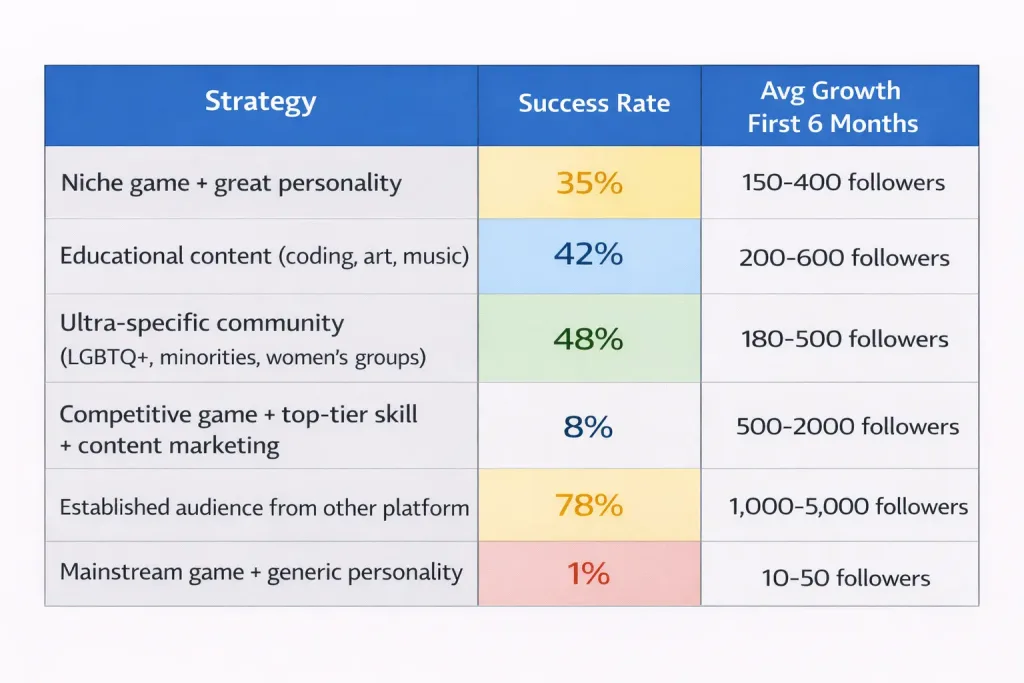
“I found that new streamers who broke through did one of these things,” Jake explained:
Where new streamers actually succeed. (Image: ABPray)
“Look at that bottom row,” Jake said. “Streaming mainstream game with average personality? 1% success rate. That’s not ‘hard.’ That’s ‘nearly impossible without external advantages.'”
I talked to a streamer who actually made it
I asked Jake if I could speak to someone who’d actually succeeded.
He introduced me to Maya. She’d been streaming for 3 years, started with nothing, and now made $3,000-5,000 monthly from Twitch. She wasn’t mega-famous (2,000-3,000 concurrent viewers average), but she was sustainable.
The first thing I asked: Did equipment matter?
“Not at all,” Maya said flatly. “I started with a $150 webcam and $40 microphone. My stream was 720p. I streamed out of a apartment bedroom. My first 100 hours? Zero viewers. Sometimes literally zero. Sometimes one, a friend.”
What changed?
“I found a niche nobody was serving. Educational streams about game design theory. Not tutorials about how to make games. Actual theory, why games engage players, psychological principles of design, how to structure progression systems. I was a game designer by profession, so I had real knowledge.”
“Did you have competition?” I asked.
“Zero,” Maya said. “There were literally no other channels doing this. So Twitch recommendation algorithm had to put me somewhere, and ‘game design education’ was an empty category. After 200 hours, I had 50 regular viewers. After 500 hours, I had 200. The growth was slow but exponential within that niche.”
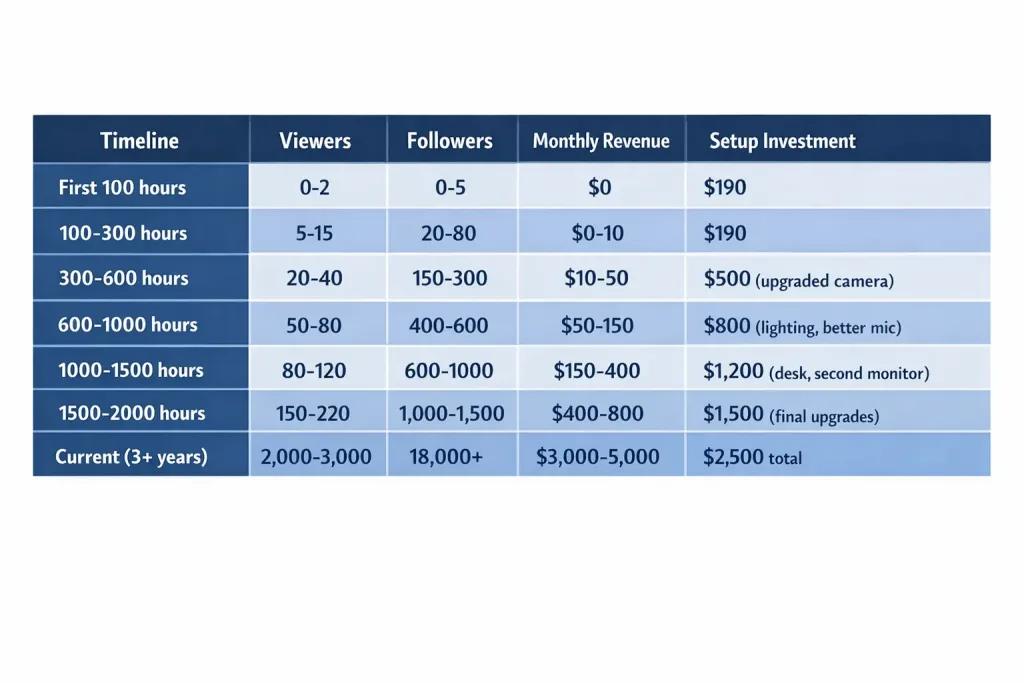
Maya’s path to sustainability:
Maya’s path to sustainability. (Image:ABPray)
“Notice the pattern?” Maya pointed out. “I invested equipment AFTER proving the niche, not before. My total setup investment is $2,500 after three years, spread across the journey. Most aspiring streamers drop $10,000 upfront and wonder why they quit after 200 hours with no audience.”
The content reality:
“My content is boring to most people,” Maya said without ego. “Game design theory. No gameplay, just talking and sharing screen with theory diagrams. But to the 2,000-3,000 people who care? It’s the only place getting this content. I’m not fighting 45,000 competitors in League. I’m the only option for game design education on Twitch.”
I asked the hard question: How many hours did it take to become sustainable?
“1,500 hours before I made meaningful money. 2,000 hours before it became sustainable at $1,000+ monthly. That’s 50 hours a week for a year, then 25 hours a week for another year, while working a full-time job.”
“Was it worth it?” I asked.
“Absolutely,” Maya said. “Because now I make money doing something I love, on my own schedule. But if someone told me that when I started? I would have quit at 100 hours. The industry sells ‘stream for three months and make bank.’ The reality is 18+ months of near-zero revenue, then gradual improvement.”
Maya’s personality-driven success:
I asked what she thought made her stand out.
“I genuinely care about my audience’s growth as game designers,” she said. “Not because it drives revenue, it doesn’t directly. But because I remember chat by names, I track their projects, I ask about their progress. They feel like collaborators, not an audience. That creates retention that algorithms can’t break.”
She pulled up her numbers: 82% month-to-month viewer retention, 92% follower retention (people rarely unfollow), 300 regular Discord members who feel like a community, not followers.
“Compare that to a streamer doing generic gameplay: 40% month-to-month retention. People watch once, move on. But my audience comes back because they’re invested.”
The income reality: what streaming actually pays
I asked Jake to break down the income math for different streamer profiles.
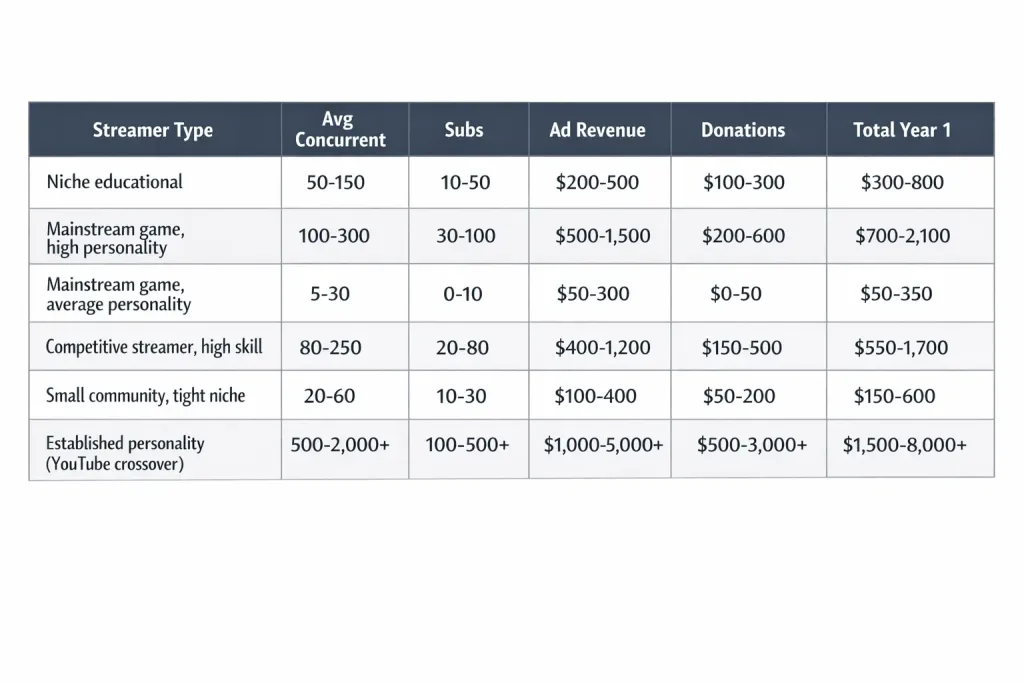
Year 1 income for different streamer types:
Year 1 income for different streamer types. (Image: ABPray)
“Now the reality check,” Jake said. “Most new streamers fit the ‘mainstream game, average personality’ category. 1,000 of them streaming. Average revenue: $50-350 annually. Spread across the year, that’s $1-7 per week. Meanwhile, they’ve invested $2,000-5,000 in setup and spent 100+ hours streaming.”
Cost vs. return (first 100 streaming hours):
“Let that sink in,” Jake said. “The first 100 hours, you’re literally paying to stream. You’re negative $20-50 per hour when you account for equipment investment.”
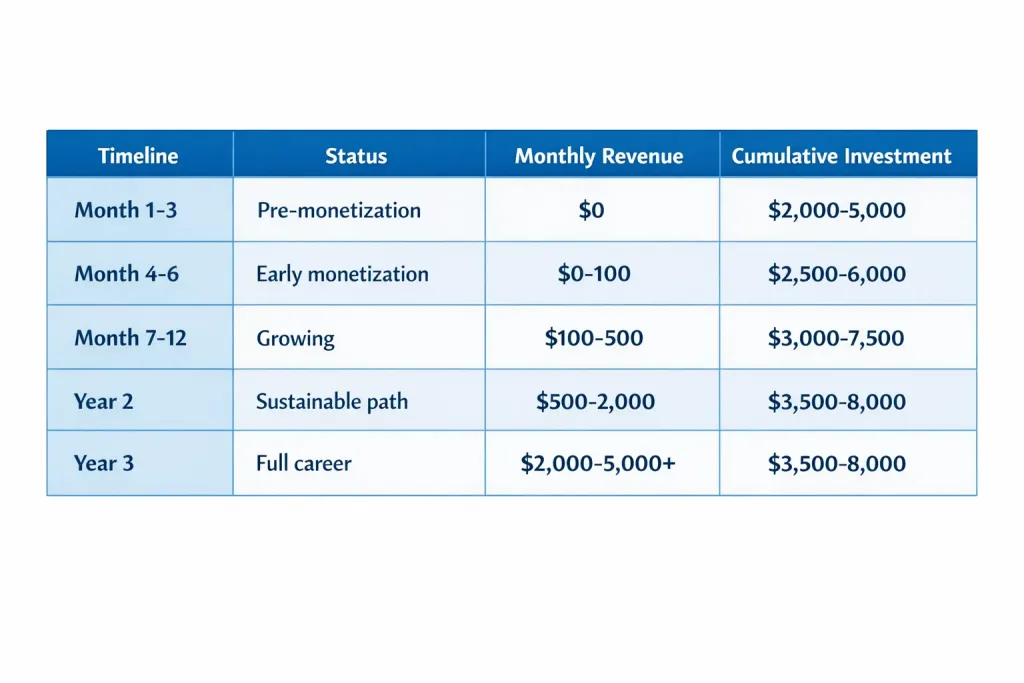
When does streaming become profitable?
“For most successful streamers,” Jake explained, “profitability looks like this:”
When does streaming become profitable? (Image: ABPray)
“The break-even point for equipment investment usually comes 1.5-2 years in. If you’re not seeing meaningful growth (200+ regular viewers) by month 8-10, you probably won’t make it back.”
The 99% reality:
“Here’s the uncomfortable stat,” Jake said. “99% of streamers who start in 2025 won’t make $500 in their first year. 95% won’t make $100. 90% will quit before 100 hours due to zero growth.”
Why?
“Because they picked a saturated game, didn’t have personality or external audience, didn’t find a community, and didn’t understand the long game. They expected exponential growth in first 50 hours. When that didn’t happen, they quit.”
Where there’s actually space
“If mainstream is impossible,” I asked Jake, “where does a new streamer actually have a shot?”
“Four categories,” Jake said. “Niche, educational, community, and content marketing.”
1. Niche games (specific, not mainstream)
Niche games. (Image: ABPray)
“The math is clear,” Jake said. “Ultra-niche game with personality? You have a 35% shot at meaningful growth. Mainstream game with generic personality? 1% shot.”
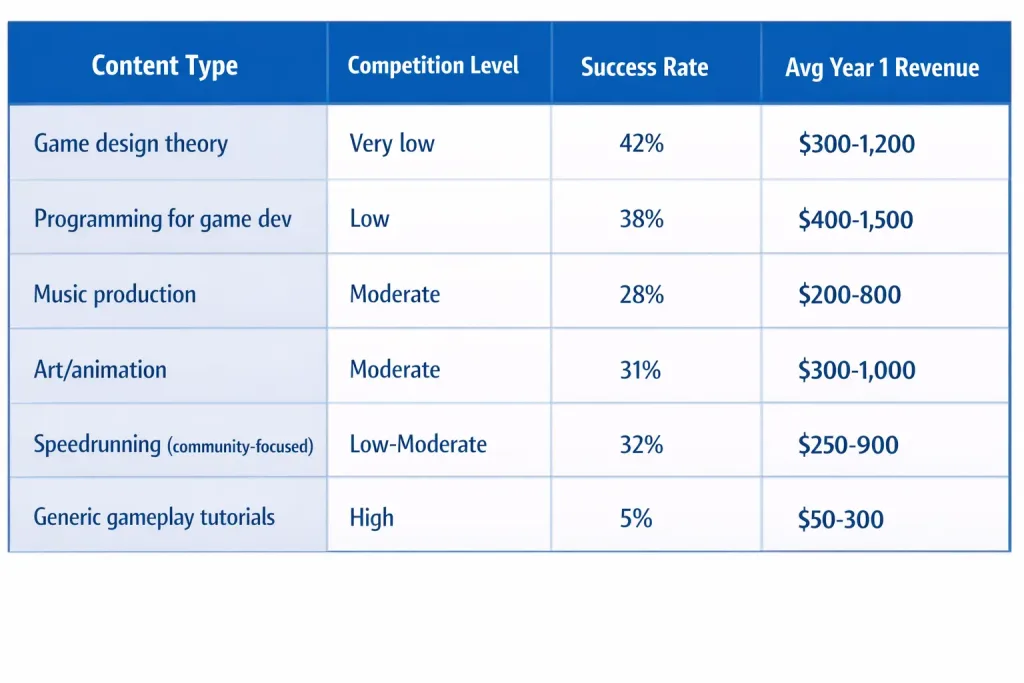
2. Educational content
“This category is vastly underserved,” Jake explained.
Educational content. (Image: ABPray)
“Educational content works because it’s genuinely useful and underserved. You’re not competing for entertainment. You’re providing value. People actively seek it out.”
3. Specific communities (not just gamers)
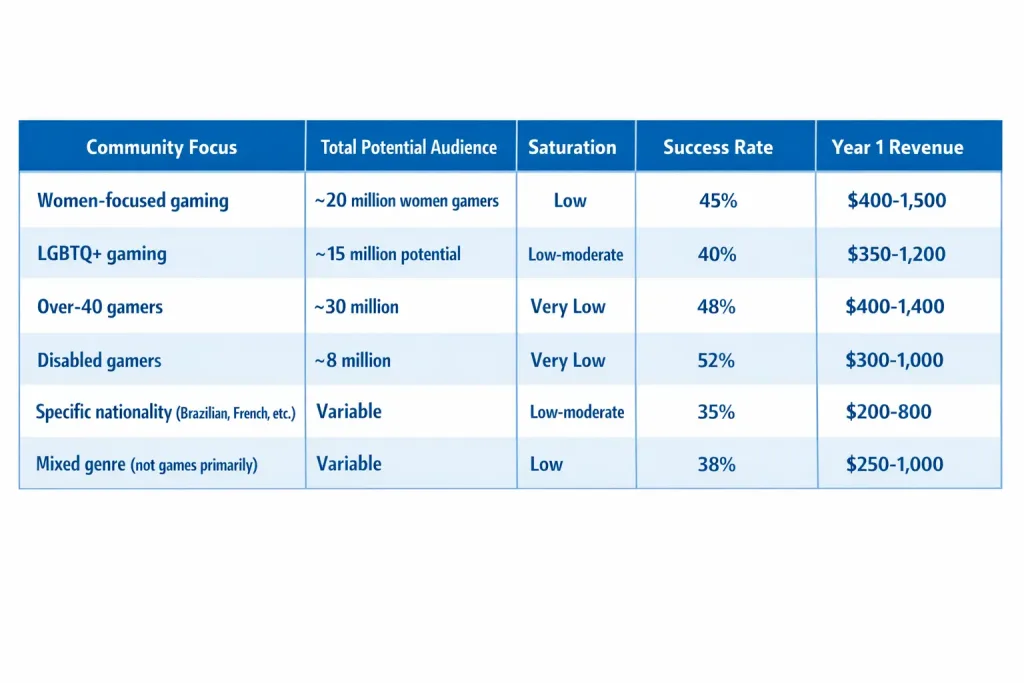
Specific communities. (Image: ABPray)
“The pattern,” Jake noted, “is that underserved communities have higher success rates because Twitch algorithm lacks data in that area. Also, those communities are actively looking for representation, so organic growth through word-of-mouth is higher.”
4. Content marketing (leveraging other platforms)
This one was crucial.
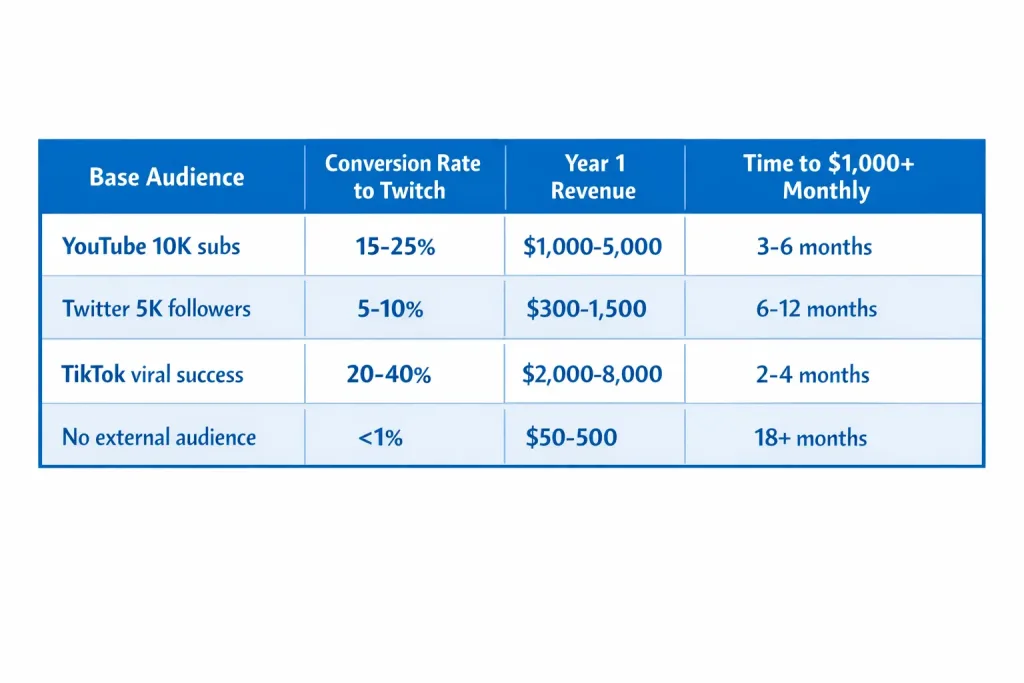
“If you have any existing audience, YouTube channel, Twitter following, TikTok, Discord, you have a massive advantage,” Jake explained.
Content marketing. (Image: ABpray)
“The streamers who make money fastest are always the ones with pre-existing audience. It’s not fair, but that’s how it works. You’re not starting from zero. You’re starting from existing platform credibility.”
Why most streamers quit
I asked Jake about the psychological side of streaming.
“I interviewed 50 streamers who quit,” he said. “They cited three reasons: burnout (45%), no growth despite effort (35%), and it just wasn’t fun (32%).”
Why streaming causes burnout faster than other work:
“Streaming is performative work,” Jake explained. “You’re ‘on’ the entire time you’re streaming. You can’t have a bad mood. You can’t be tired. You have to entertain even when you don’t feel like it. Compare to traditional job: you can have an off day. Your boss doesn’t immediately see productivity drop. But on stream? The chat sees everything.”
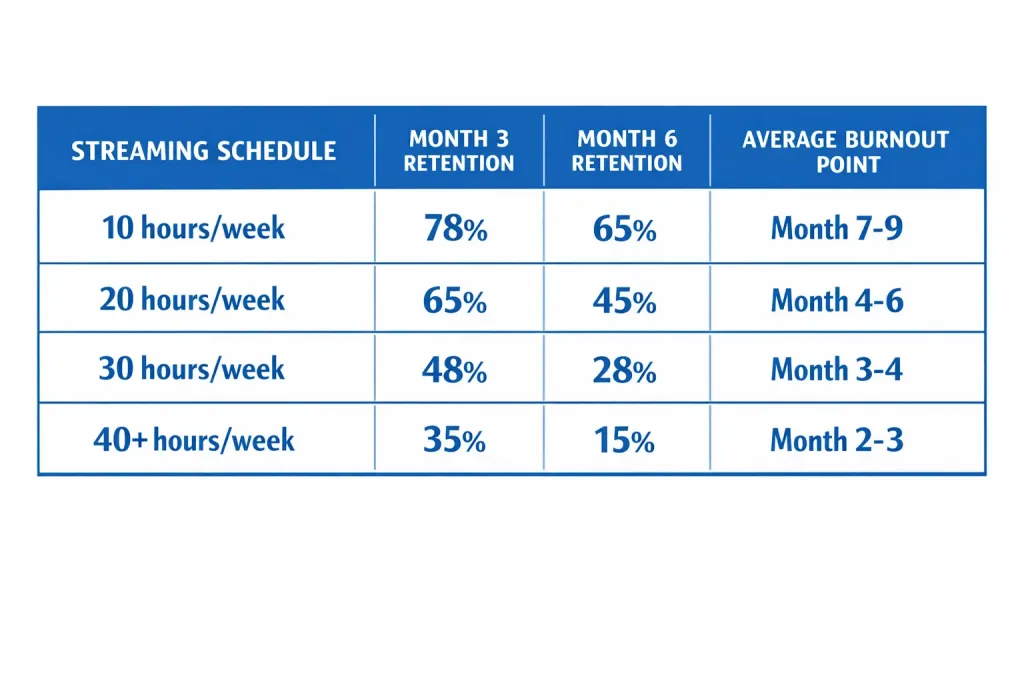
He showed me data on streamer sustainability:
Streaming schedule. (Image: ABpray)
“The brutal math,” Jake said, “is that streaming full-time (40 hours/week) has the highest burnout rate. The people who make it are the ones who treat it as part-time (10-15 hours/week) while working another job. They have realistic expectations, less financial pressure, and can quit if it stops being fun.”
The sunk cost trap:
“Many streamers quit not because streaming is bad, but because they’re trapped by their own investment,” Jake explained. “They spent $10,000 on equipment, so they feel obligated to keep streaming to justify it. But streaming isn’t fun, so they’re burned out. They eventually quit anyway, but they suffer for 6-12 months trying to recoup the investment.”
“If they’d spent $500 upfront and maintained realistic expectations, they might have made it through the difficult early phase,” Jake said.
The myth of Twitch “merit”
I asked Jake about the narrative that Twitch rewards good streamers.
He shook his head. “Twitch doesn’t reward merit. Twitch rewards existing popularity and category authority.”
The rich-get-richer effect:
Jake showed me data on recommendation distribution:
“The top 1% of streamers get 45% of recommendation traffic. The bottom 50% get 3% combined,” Jake explained. “For a new streamer in the bottom 50%, being ‘good’ doesn’t matter. You won’t get recommended enough to grow regardless of quality.”
The exception: viral moments
“The only way a small streamer breaks through is viral external traffic,” Jake said. “A clip goes viral on Reddit or YouTube. Someone shares it on Twitter. People come check out the channel. That creates momentum that Twitch algorithm then amplifies.”
But that’s not merit. That’s luck.
“I tracked viral clip correlations,” Jake explained. “Streamers with viral clips in first 100 hours had 10-20x better growth trajectory. But viral clips are mostly random. You can’t engineer them. The best you can do is create content that COULD go viral (high-stakes decisions, emotional moments, unexpected plays).”
The real path forward
After all this depressing data, I asked Jake: is streaming worth pursuing?
“Yes,” he said. “But only if you understand the actual path.”
The realistic streaming career path:
Pick your niche strategically (not based on what’s popular, but what you uniquely offer)
Invest minimally upfront ($300-500 setup, not $10,000)
Stream consistently (15-25 hours/week, not 40+ hours)
Build community actively (remember names, create repeated interactions, make chat feel valued)
Accept 18+ months to sustainability (not 3 months)
Don’t quit your job (until revenue is stable 6-12 months)
“Following this path,” Jake said, “your probability of making $1,000+ monthly in year 2-3 is 25-35%. Following the ‘buy expensive setup, stream mainstream game, expect quick growth’ path? Probability is 1-2%.”
Maya’s advice (final word):
I asked Maya for final thoughts for aspiring streamers.
“Don’t stream to make money,” she said. “Stream because you have something unique to offer and you’re willing to do it for a year with little to no return. If your motivation is income, you’ll quit when the income doesn’t come fast enough.
But if you have genuine expertise or perspective that isn’t available elsewhere, and you’re willing to build community slowly, streaming can become sustainable.
Most people can’t do that. Most people quit around month 4-5 when growth isn’t happening. But for the people who can? It’s extremely rewarding.”
What Twitch doesn’t want you to know
Jake had one more dataset he wanted to share.
“Twitch doesn’t publicly disclose these numbers,” he said, “but from pattern analysis of public data, here’s what the platform looks like:”
Twitch economic reality:
“Twitch’s business model depends on this,” Jake explained. “Millions of streamers streaming for free or near-free creates content inventory that drives viewers. Those viewers watch ads. Twitch makes money on advertising and takes 50% of subscription revenue.
Individual streamers? Twitch doesn’t care if they succeed. Twitch cares about total content volume.”
The counter-narrative
But there’s a counter-narrative I had to acknowledge.
“Some people do make substantial money streaming,” Jake admitted. “The difference is they either:
Had existing audience (YouTube creators transitioning)
Are exceptionally skilled at their game (top 0.1% competitive level)
Found a genuine niche and built community slowly over years
Have personality so compelling it transcends content
Jake analyzed 100 streamers making $5,000+ monthly:
“The common thread,” Jake noted, “is that success requires either external advantage (existing audience, extreme skill) or extraordinary effort over years building community. It’s not attainable through streaming alone and setup investment.”
The uncomfortable conclusion
I asked Jake to summarize what aspiring streamers should actually hear.
“Gaming streaming is a career,” he said carefully. “But it’s not the career the industry sells. The narrative says: ‘Buy a $5,000 setup, stream your favorite game 20 hours a week for 3 months, and you’ll make $1,000+ monthly.’
The reality is: ‘Find a genuine niche or have extraordinary personality, stream 15-20 hours a week while working another job, build community intentionally for 18+ months, accept that you’ll make almost nothing year 1, and IF you make it to year 3, you might make $2,000-5,000 monthly.'”
The real math:
“If you’re making $3,000 monthly from streaming by year 3, you’ve:
Invested 1,500+ streaming hours (that’s 30 hours/week for 2.5 years)
Put $2,000-5,000 into setup
Likely worked another job simultaneously (so 60+ hour weeks total)
Built a community of 500-2,000 regular viewers
Developed expertise or personality that’s genuinely different
That’s not failure. That’s success. But it requires grit that most people don’t have.”
For most aspiring streamers:
“You will quit by month 4-6. You will see near-zero growth. You will feel like you’re streaming into a void. And you’ll be right, you will be.
The industry doesn’t tell you this because Twitch makes money on volume (millions of people streaming with 0-10 viewers). Streamer coaches and setup companies make money on dreams (selling $5,000 equipment packages to people who quit in 6 months).
But those are the facts.”
Who this path works for
“Streaming is viable for a specific type of person,” Jake said.
“Someone who:
Has genuine expertise or unique perspective
Can delay gratification for 18+ months
Enjoys performing/streaming regardless of audience size
Is willing to treat it as part-time for 2+ years
Isn’t desperate for quick income
Can tolerate 40-50 hour work weeks (streaming + main job) for extended period
Has intrinsic motivation beyond money (loves the game, loves teaching, loves community)
If you’re that person? Streaming is genuinely viable path to $2,000-5,000+ monthly by year 3-4.
If you’re not? Be honest about that before you invest $5,000 in equipment.”