
Audio
Hi-Res audio explained: is it worth it?
One question remains: does Hi-Res Audio truly deliver superior sound, or is it just another marketing claim? Discover the truth inside.


In the modern digital landscape, audio has moved beyond being a mere accompaniment to video; it is now the primary driver of engagement, storytelling, and brand identity. As we navigate the professional and creative demands of 2025, the barrier between high-end studio production and home-based content creation has virtually vanished. Today’s creators—ranging from podcasters and YouTubers to AI researchers and sound designers—require tools that offer more than just cutting and pasting. They need intelligent noise restoration, seamless multitrack synchronization, and AI-assisted mastering to compete in a global market.
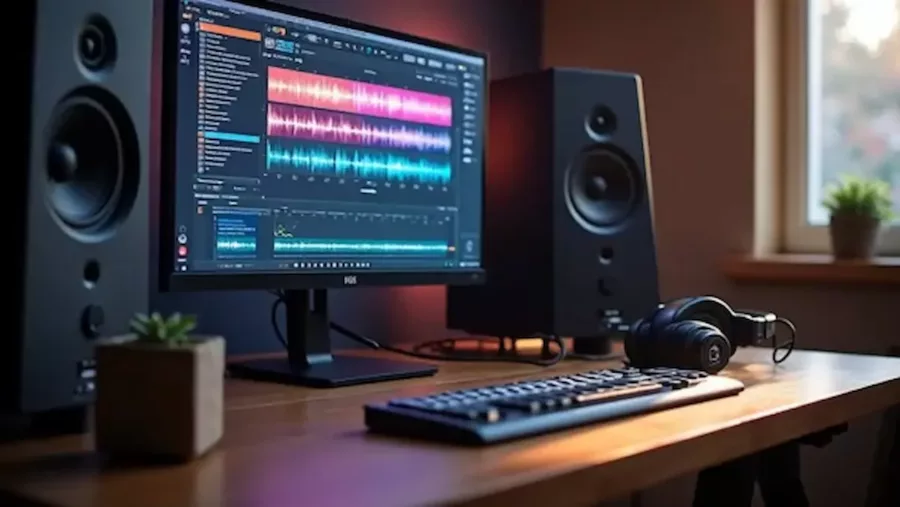
The evolution of Digital Audio Workstations (DAWs) in 2025 is defined by “Smart Workflow.” Whether it is Adobe’s deep integration of generative AI to “clean” audio in seconds or Logic Pro’s sophisticated session players that act as a virtual band, the software you choose dictates the speed and quality of your output. For any creator looking to elevate their project, these three platforms represent the gold standard of modern audio engineering, each catering to a different philosophy of production.
Adobe Audition remains the industry benchmark for precision audio editing, especially for creators whose work is deeply intertwined with video and professional broadcasting. In 2025, Audition has pivoted from being a traditional editor to an AI-augmented “finishing” station. The centerpiece of this transformation is the Essential Sound Panel, which now includes one-click “Enhance Speech” capabilities. This tool allows creators to take a recording made in a noisy environment and transform it into a studio-quality track, effectively removing room reverb and background hum without the “robotic” artifacts common in earlier versions.
For tech creators and podcasters, the Spectral Frequency Display is Audition’s secret weapon. It allows you to “see” sound as a visual heat map, enabling you to select and delete specific frequencies—such as a distant siren or a lip smack—without affecting the surrounding dialogue. Furthermore, Adobe’s Remix tool uses AI to automatically re-arrange any song to fit a specific duration. If your video is exactly 4 minutes and 12 seconds, Audition will intelligently cut and loop the music to end perfectly on the beat, saving hours of manual editing.
Audition’s greatest strength in 2025 is its “Dynamic Link” with Adobe Premiere Pro. For video creators, this means you can send your audio tracks to Audition, apply professional restoration and compression, and have those changes automatically update in your video timeline. This eliminated the need for exporting and importing intermediate files, creating a frictionless bridge between sight and sound. Whether you are producing a high-stakes documentary or an AI-narrated tech review, Adobe Audition provides the surgical precision required for world-class results.
Audacity has long been celebrated as the champion of the “free and open-source” movement, but in 2025, it has shed its “basic” reputation to become a formidable competitor to paid software. Celebrating over 25 years of development, the latest version of Audacity has introduced OpenVINO AI Plugins, developed in collaboration with Intel. These plugins bring sophisticated machine learning directly to a free platform, including features like Music Separation, which allows you to take a finished song and split it into four distinct stems: vocals, drums, bass, and other instruments.
For the modern creator on a budget, Audacity offers “Non-Destructive Editing” and real-time effects, a major update that brings it in line with professional DAWs. This allows you to apply an equalizer or a compressor and hear the result instantly without permanently altering the original file. Its interface remains lightweight and efficient, making it the perfect tool for creators working on robotics projects or AI voice experiments who need a fast, reliable way to record and trim audio without the bloat of a heavy subscription service.
The 2025 version of Audacity also features Whisper Transcription, an integrated AI tool that can transcribe audio into text with remarkable accuracy. This is a game-changer for podcasters who need to generate subtitles or show notes instantly. Despite its zero-dollar price tag, Audacity’s support for VST3 and AU plugins means its functionality is nearly infinite. It stands as a testament to the power of community-driven software, offering a professional-grade toolkit to anyone with a computer and a creative spark.
For creators within the Apple ecosystem, Logic Pro is the undisputed king of creative audio. While Audition focuses on “finishing” and Audacity on “versatility,” Logic Pro is designed for Composition and Synthesis. In 2025, Logic Pro has integrated “AI Studio Assistants” that can act as collaborative partners. The Stem Splitter tool allows creators to reclaim old recordings by extracting high-quality vocals or instruments from a single stereo file, while the ChromaGlow dynamics processor uses AI to add “analog warmth” to digital tracks, mimicking the sound of expensive vintage hardware.
Logic Pro is the primary choice for music-heavy creators, featuring a massive library of over 13,500 royalty-free loops and 6,000 presets. Its Spatial Audio tools are particularly relevant in 2025, as more platforms like Apple Music and Netflix demand Dolby Atmos mixes. Logic Pro makes 3D audio accessible, providing a visual “Panner” that allows you to move sounds around the listener in a virtual space, creating a truly immersive experience for the audience.
Beyond music, Logic Pro is a robust tool for narrative creators. The Smart Tempo feature allows you to record without a metronome; the software will analyze your natural rhythm and adjust the project grid to match your performance. This creates a more organic, human feel for voiceovers and soundtracks. With its one-time purchase model and seamless integration with the iPad for mobile editing, Logic Pro offers a “best-in-class” experience for Mac users who want to bridge the gap between amateur hobbyist and professional producer.
In conclusion, the audio editing landscape of 2025 offers a specialized tool for every type of creator. Adobe Audition stands as the ultimate choice for the professional seeking a seamless content supply chain and surgical restoration tools. Audacity remains the most accessible and ethically open platform, now supercharged with AI plugins that provide “big studio” features for free. Logic Pro continues to lead the way for Mac-based artists, blending powerful composition assistants with industry-standard immersive audio capabilities.
Choosing the right software in 2025 is about matching the tool to your specific “signal chain.” If your workflow is video-first, Adobe is the answer. If you are an experimenter or budget-conscious creator, Audacity is your home. If you are a Mac-based creative looking to build entire worlds of sound, Logic Pro is unparalleled. As AI continues to automate the technical drudgery of noise reduction and leveling, the focus for creators is shifting back to the art of the story. By mastering one of these three platforms, you are giving yourself the freedom to focus on your vision, knowing that the technical execution will be flawless.


Amanda Torati is a linguist and postgraduate scholar specializing in digital communication. With a deep-seated passion for the tech world, she focuses on deconstructing complex digital trends and making them accessible to a global audience. Amanda combines her academic background in languages with technical research to ensure that every guide and review at ABWavesTech is both precise and easy to understand for our readers.
One question remains: does Hi-Res Audio truly deliver superior sound, or is it just another marketing claim? Discover the truth inside.
Listen closely to discover how mastering bitrate, codecs, and devices transforms your streaming audio experience—unlock unparalleled sound quality today.
Starting strong in music production means mastering essential tips that can transform your sound—discover what every beginner must know to succeed.

Harness the power of immersive sound and discover how upgrading your home theater audio can transform every movie night into an unforgettable experience.
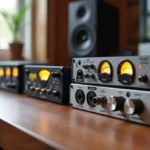
Looking for the perfect audio interface to elevate your studio setup? Discover six top choices that blend quality and versatility seamlessly.
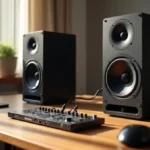
Getting the perfect studio monitors involves more than specs—discover key factors that transform your sound clarity and why placement matters most.