

TV
4 Smart thermostats that save energy and money
Find out how four innovative smart thermostats can transform your energy bills and comfort—discover which one fits your lifestyle best today.


Are curved TVs worth it? It is a question that has persistently sparked debate among technology enthusiasts and home entertainment aficionados since their initial market debut. These displays promise a unique viewing experience, aiming to be more immersive and visually striking than their flat-screen counterparts, but do they genuinely live up to the substantial hype and premium price point? Before committing to a curved TV as the centerpiece of your setup, a thorough and objective examination of their design philosophy, technological advantages, and practical limitations is absolutely essential. The answer might surprise you once you understand the engineering and acoustic principles that truly differentiate curved TVs from standard flat panels.
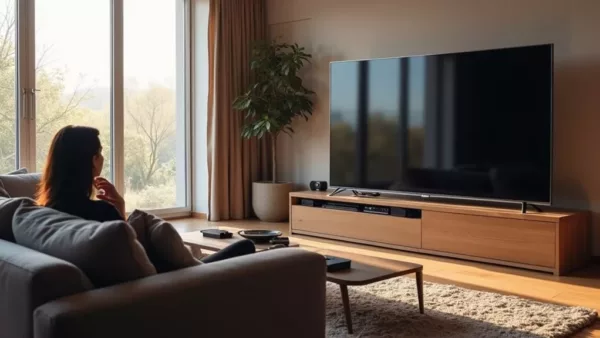
This comprehensive analysis will delve deep into the mechanics, performance metrics, real-world constraints, and financial considerations associated with curved TVs, allowing you to make a fully informed decision based on your specific needs and environment.
The concept behind curved TVs is not merely a design flourish; it is an attempt to address fundamental principles of human vision and display geometry. Curved TVs are manufactured with a gently arced screen that is intended to more closely match the natural curve of the human eye and the field of view.
This clever design utilizes advanced manufacturing technology to mold the panel into a specific radius. The ideal curvature is calculated to ensure that every point on the screen surface is equidistant from the viewer’s eye, provided the viewer is seated at the “sweet spot” at a specific distance from the screen center.
If you are particularly drawn to the latest display technology and desire a television that promises a highly engaging and slightly more cinematic presentation for your favorite content, the underlying philosophy of curved TVs is certainly a compelling one.
A key and often touted benefit of curved TVs is their ability to deliver an enhanced level of immersion and a truly captivating viewing experience, particularly for the lone viewer or a tightly seated pair.
The curved TV design aims to gently wrap the image around the user’s peripheral field of vision. When the viewer is seated at the optimal distance and angle, the curved edges subtly fill the periphery, making the screen feel larger and the image more enveloping.
This makes curved TVs a strong choice for the dedicated enthusiast looking to maximize the immersive and captivating quality of their home entertainment, provided their viewing habits align with the necessary seating arrangement.
While curved TVs offer an unparalleled immersive experience for the central viewer, they are significantly constrained by their inherent geometry, leading to serious limitations in viewing angles and room setup flexibility. This is arguably the biggest practical drawback of the technology.
For the absolute best image quality, including maximum brightness and zero geometrical distortion, viewers must sit directly in front of the screen. This optimal viewing zone is severely narrow on a curved TV compared to a flat panel.
If your primary use case involves multiple viewers or a wide seating area, these viewing angle challenges mean a curved TV may actively detract from the overall enjoyment compared to a standard flat-screen TV.
Picture quality on a curved TV can certainly be impressive, specifically in terms of perceived depth and contrast, which brings certain content to life. However, the design inherently introduces unique challenges related to reflections and light distribution.
The most significant and often cited issue with curved TVs is the way they handle ambient light. The curved design acts like a subtle convex mirror, which can catch and concentrate ambient light sources from the room, making reflections more noticeable and potentially much more distracting than on a flat screen.
For optimal enjoyment, staying within the ideal viewing zone and managing ambient light is absolutely key to enjoying the best image that a curved TV can offer.
When comparing the financial outlay for curved vs. flat screen TVs, cost remains an important, differentiating factor.
Curved TVs typically command a higher price tag compared to their equivalent flat-screen counterparts with similar core technological specifications (e.g., Mini LED or OLED panel type, resolution, processing power).
Flat screen TVs, on the other hand, benefit from decades of streamlined, mass-market manufacturing. They are more affordable and, critically, offer a vastly wider selection across all price tiers and sizes. A buyer looking for the best performance-to-dollar ratio will almost always find a superior technical display in the flat-screen category.
If you are deciding between curved vs. flat screen TVs, you must weigh whether the extra financial cost of the curve truly enhances your specific viewing preferences and needs enough to justify the performance trade-offs and higher expense.
Despite the limitations, curved TVs are not without their appeal and are perfect for specific, highly optimized viewing scenarios.
Curved TVs are an excellent fit for the viewer who meets the following criteria:
For these users, the curved TV design successfully enhances depth perception and creates a more engaging, captivating picture. Conversely, if your room is wide, bright, or hosts many simultaneous viewers, a flat screen remains the undeniably practical and visually superior choice.
Are curved TVs worth it? The answer is nuanced: curved TVs provide a unique and immersive viewing experience that is genuinely appreciated by tech lovers and dedicated single-seat gamers. The design successfully helps reduce distortion at the edges and creates a more engaging picture, provided you sit precisely in front of the screen at the optimal distance.
However, curved TVs are a product of compromise. They are best enjoyed only with a highly specific room setup, as their inherent limited viewing angles and severe vulnerability to concentrated reflection issues can significantly degrade the experience for off-center viewers. Furthermore, the technology demands a noticeable higher price tag compared to flat screens offering the same technical performance.
Ultimately, are curved TVs worth it? It depends entirely on your personal viewing preferences, the geometry and lighting of your room, and whether the immersive benefit for one viewer outweighs the practical limitations and added cost. Thinking about these factors will ensure you make a smart choice that aligns with your true home entertainment needs.


Amanda has a degree in Languages, is a postgraduate student, and is passionate about content creation. After joining Cenário Capital, she discovered a strong interest in technology. She currently works on the Marketing team, in the SEO and Content squad.
Find out how four innovative smart thermostats can transform your energy bills and comfort—discover which one fits your lifestyle best today.
Smart lighting solutions can transform your home’s atmosphere effortlessly—discover the top three smart lights that blend innovation with style and efficiency.

Optimize your daily routine effortlessly with home automation—discover how smart technology transforms convenience, comfort, and security in ways you never imagined.
Perfect your living space with the top 3 smart home devices that promise convenience, security, and energy savings—discover which upgrades truly transform your home.
Step into stunning visuals and immersive sound with these top 3 TVs—discover which model transforms your space into the ultimate home theater experience.
Discover three top TVs that dramatically elevate your home theater experience—delivering stunning visuals and features you won’t want to miss.