

Audio
3 Smart speakers that make your life easier
Power up your home with three smart speakers that simplify daily routines—discover their unique features and find out which one suits you best.


The journey into the world of high-fidelity audio is often described as a revelation. For most people, music is a background activity consumed through generic plastic earbuds or integrated smartphone speakers. However, for those who choose to cross the threshold into the audiophile realm, music becomes a visceral, three-dimensional experience. The pursuit of “perfect” sound—often referred to as transparency or “high fidelity”—is about removing the veil between the artist and the listener. It is about hearing the intake of breath before a vocal line, the resonant wood of a cello, and the precise placement of every instrument on a virtual stage.
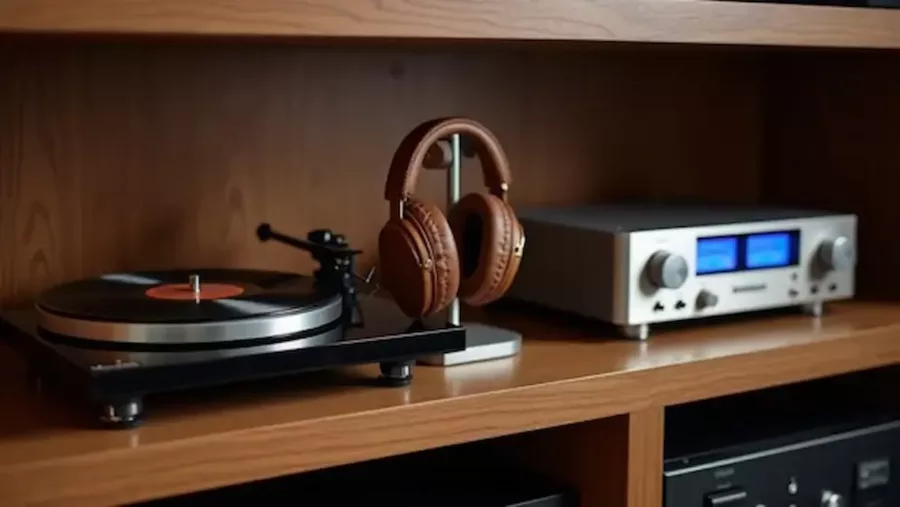
To achieve this level of sonic purity, one must understand the “signal chain.” Every digital song begins as a series of zeros and ones, and for that data to reach your ears as beautiful music, it must pass through several critical stages of translation and amplification. In 2025, the technology available to music lovers has reached a point where studio-quality sound is no longer reserved for those with tens of thousands of dollars to spend. By investing in three fundamental pieces of hardware—high-quality headphones, a dedicated Digital-to-Analog Converter (DAC), and an audiophile-grade amplifier—any music lover can transform their home into a private concert hall.
In the hierarchy of audio equipment, the “transducer”—the device that actually converts electrical energy into sound waves—is arguably the most important. In the audiophile world, headphones are often preferred over speakers for their ability to eliminate the influence of room acoustics. When you listen to speakers, the sound bounces off walls and furniture, coloring the audio. With high-quality headphones, you are essentially placing two perfectly tuned acoustic environments directly over your ears.
There are two primary categories of high-end headphones that every enthusiast should understand: Open-Back and Closed-Back. Open-back headphones, such as the Sennheiser HD600 series or the Focal Utopia, are the darlings of the audiophile world. Because the earcups are perforated, air can flow freely, which prevents pressure buildup and results in a “soundstage” that feels vast and airy. It feels as though the music is happening around you rather than inside your head. While they leak sound and offer no isolation, they provide the most natural and accurate frequency response available.
Conversely, closed-back headphones are essential for those who need isolation. High-end closed-back models use sophisticated internal dampening to provide deep, impactful bass and crisp highs without letting noise in or out. Regardless of the style, the hallmark of audiophile headphones is “flat” or “neutral” tuning. Unlike consumer headphones that artificially boost the bass to hide flaws, audiophile gear aims to reproduce the music exactly as it was recorded. This allows the listener to hear the “dynamic range”—the contrast between the softest whisper and the loudest orchestral crescendo—with startling clarity. In 2025, the use of exotic materials like beryllium drivers or planar magnetic diaphragms has pushed the limits of detail, allowing for a level of speed and precision that makes music feel “alive” and immediate.
If headphones are the “voice” of your system, the Digital-to-Analog Converter (DAC) is the “brain.” Every time you stream music from Spotify, Tidal, or Apple Music, you are handling digital data. However, human ears cannot hear digital data; we hear analog sound waves. Every smartphone, laptop, and tablet has a built-in DAC to perform this conversion, but these integrated chips are often an afterthought. They are prone to “jitter” (timing errors) and electrical interference from the device’s other internal components, resulting in a sound that is flat, muddy, and lacking in detail.
A dedicated, external DAC is designed with a single purpose: to perform the most accurate mathematical translation of digital data into an analog voltage. Modern audiophile DACs, such as those from brands like Chord Electronics or Schiit Audio, use high-precision clocks and advanced filtering to ensure that the timing of the music is perfect down to the nanosecond. This precision manifests as improved “imaging”—the ability to close your eyes and point exactly to where the drummer is standing versus the guitarist.
In 2025, the importance of a dedicated DAC has increased due to the prevalence of “High-Res” audio. Services now offer files with bitrates far exceeding CD quality, often up to 24-bit/192kHz or even DSD (Direct Stream Digital) formats. An integrated computer soundcard cannot handle these files without downsampling them, which loses the very detail you are paying for. A dedicated DAC acts as a clean, isolated bridge, ensuring that the high-resolution signal remains pristine. By removing the “digital glare” and harshness associated with cheap converters, a dedicated DAC restores the warmth, smoothness, and organic texture of the original recording.
The final piece of the puzzle is the amplifier. Once the DAC has created a clean analog signal, that signal is far too weak to move the heavy drivers in high-quality headphones. It needs to be boosted. While many people think of an amplifier simply as a volume knob, its true role in the audiophile world is “control.”
High-fidelity headphones often have high “impedance” (measured in Ohms), meaning they require more voltage to reach their full potential. If you plug a pair of high-impedance headphones into a smartphone, they will sound quiet, thin, and lifeless. An audiophile-grade amplifier provides the “headroom” necessary to drive these headphones with authority. It ensures that when a heavy bass note hits, the amplifier has enough power in reserve to move the driver quickly and stop it precisely, preventing the sound from becoming “flabby” or distorted.
Amplifiers also come in different “topologies,” or circuit designs, each offering a different sonic flavor. Solid-state amplifiers are known for their transparency, reliability, and surgical precision. They are the choice for those who want the most accurate representation of the signal. On the other hand, Vacuum Tube (Valve) amplifiers are beloved for adding a “harmonic distortion” that humans find incredibly pleasing. They add a sense of “bloom,” warmth, and “soul” to the music, making digital recordings feel more like a vintage vinyl record. In 2025, we are also seeing the rise of “Class D” amplification that is incredibly efficient and compact without sacrificing the “musicality” of traditional designs. By providing a clean, powerful, and stable signal, the amplifier ensures that your headphones can perform at their absolute engineering limits.
The true magic of audiophile gear happens when these three components work in harmony. This is known as “synergy.” You might have the most expensive headphones in the world, but if you are feeding them a distorted signal from a cheap DAC or an underpowered amplifier, you will never hear what they are truly capable of. Conversely, a high-end DAC is wasted on a pair of $20 grocery-store earbuds.
Building an audiophile setup is about creating a balanced ecosystem. When the DAC provides a perfect reconstruction of the data, the amplifier boosts it with zero added noise, and the headphones translate it into physical air movement with total accuracy, the result is “transparency.” You stop listening to the equipment and start listening to the music. This setup also allows for “critical listening,” where you can begin to distinguish between different recording techniques, the acoustics of different recording studios, and even the specific brands of instruments used by the artists. It turns music consumption into an active, intellectual, and deeply emotional hobby.
In conclusion, the path to superior sound quality is a journey that rewards the curious and the passionate. For any music lover in 2025, owning high-quality headphones, a dedicated DAC, and an audiophile-grade amplifier is the ultimate way to honor the art of music. This trio of gear removes the technological barriers that traditionally stifle the emotional impact of a song. High-quality headphones provide the canvas, the DAC provides the fine-point detail of the paint, and the amplifier provides the light and shadow that bring the masterpiece to life.
As digital streaming continues to dominate the market, the need for high-fidelity hardware has never been greater. We live in an era where more music is accessible than ever before, but it is often heard through the most compromised hardware in history. By investing in these three pillars of the audiophile world, you are making a commitment to the quality of your own experience. You are choosing to hear every vibration, every harmony, and every subtle emotion that the artist intended to share. Whether you are rediscovering a classic album from the 1970s or exploring the latest high-res release from a modern composer, audiophile gear ensures that you aren’t just hearing the music—you are feeling it. In the end, the best audio equipment is the gear that makes you want to listen to just one more song, turning every listening session into a profound and immersive event.


Amanda has a degree in Languages, is a postgraduate student, and is passionate about content creation. After joining Cenário Capital, she discovered a strong interest in technology. She currently works on the Marketing team, in the SEO and Content squad.
Power up your home with three smart speakers that simplify daily routines—discover their unique features and find out which one suits you best.

Why settle for less when these 6 gaming headsets can elevate your gameplay with unmatched sound quality and comfort? Discover which one fits you best.
Powerful yet user-friendly, these 3 best audio editing software for creators in 2025 offer unique features to elevate your sound—but which one suits you best?

Immerse yourself in unparalleled audio quality with these top 3 surround sound systems—discover which one transforms your space into a cinematic haven.

Unlock unbeatable sound quality and durability with the top 4 portable speakers for travel and outdoor adventures—discover which one suits your journey best.
One question remains: does Hi-Res Audio truly deliver superior sound, or is it just another marketing claim? Discover the truth inside.