

Audio
3 Audiophile gear that every music lover should own
Master the art of sound with three must-have audiophile gear pieces that elevate your music experience to unparalleled heights.


The fundamental nature of the domestic environment has undergone a radical transformation over the last decade, transitioning from a static collection of appliances into a dynamic, responsive ecosystem. As we navigate the complexities of 2025, the smart speaker has shed its reputation as a mere novelty, a device once used primarily for setting kitchen timers or checking the weather, and has emerged as the central nervous system of the modern household. This evolution is driven by the convergence of high-speed connectivity, the universal adoption of the Matter interoperability standard, and the integration of generative artificial intelligence into voice assistants. Today, a smart speaker is an essential tool for cognitive offloading, allowing individuals to manage the minutiae of daily life through natural language. Choosing the right device is no longer an isolated hardware purchase; it is a strategic decision about which technological philosophy will govern your home. This guide provides an exhaustive analysis of the three market leaders that define the state of the art in 2025, illustrating how these compact units drive massive gains in personal productivity and domestic harmony.
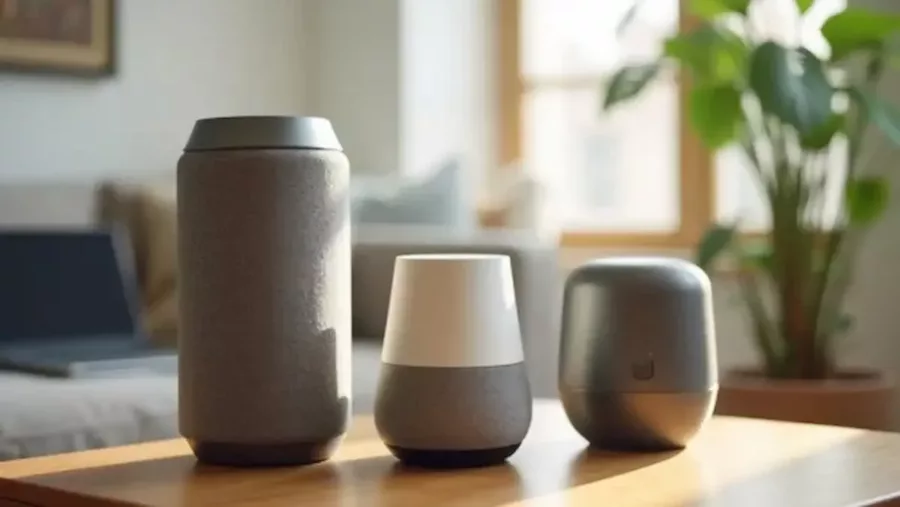
The Amazon Echo Dot has maintained its position as the world’s most popular smart speaker by consistently lowering the barrier to entry for home automation. In 2025, the Echo Dot is much more than a budget-friendly audio device; it is a sophisticated edge-computing node. The physical design remains a discreet, fabric-covered sphere, but the internal components have been overhauled to support the new “Alexa+” intelligence tier. This upgraded AI is capable of “reasoning” through complex requests, moving away from rigid command structures toward a fluid, conversational interface that understands nuance and intent.
The true power of the Echo Dot in 2025 lies in its “Sensor Fusion” capabilities. By combining ultrasound motion detection, temperature sensors, and ambient light sensors, the device achieves a state of “Ambient Awareness.” This means the speaker does not wait for a wake word to be useful. For example, the Echo Dot can detect when a room has been unoccupied for twenty minutes and automatically power down lights and climate control to save energy. Conversely, it can recognize the specific acoustic signature of a morning routine, such as the sound of a coffee grinder or a shower running, and proactively offer a briefing on the morning commute or the day’s top headlines. This shift from reactive to proactive assistance is the hallmark of the 2025 smart home.
Connectivity remains a cornerstone of the Amazon philosophy. The Echo Dot acts as a bridge for the Sidewalk network and a controller for Matter over Thread. This ensures that even low-power devices, such as smart blinds or door sensors located at the far reaches of a property, remain connected and responsive. For families, the “Drop In” feature and the ability to use the Echo Dot as a Wi-Fi extender through Eero Built-in functionality add layers of utility that go far beyond simple voice commands. The Echo Dot is the ideal choice for the “pragmatic” smart home, one that prioritizes broad device support, aggressive automation, and an accessible price point. It turns the house into a self-managing entity, freeing the occupants to focus on their creative and professional pursuits.
If the Amazon ecosystem is built on the foundation of the “Smart House,” the Google Nest Audio is built on the foundation of the “Smart Assistant.” In 2025, the integration of Google’s Gemini AI has fundamentally altered the utility of the Nest Audio. It has evolved from a tool that searches the web into a cognitive partner that understands the personal context of the user’s life. The hardware itself is designed for acoustic fidelity, featuring a woofer and tweeter configuration that provides a rich, balanced soundstage, but the software is what truly differentiates this device in a crowded market.
The Google Nest Audio excels in “Contextual Memory.” Because it is deeply integrated with the Google Workspace, including Gmail, Calendar, and Keep, the assistant can synthesize information across platforms. A user can ask, “When is my flight, and do I have time to grab lunch with Sarah before I leave?” The Gemini-powered assistant will check the flight confirmation in Gmail, the lunch invitation in Calendar, and real-time traffic data from Google Maps to provide a reasoned, helpful response. This level of cross-platform intelligence makes the Nest Audio an indispensable tool for students, researchers, and busy professionals who need to manage vast amounts of personal data without staring at a screen.
Furthermore, Google has utilized its leadership in machine learning to improve “Multi-User Recognition.” In 2025, the Nest Audio can distinguish between the voices of different family members with near-perfect accuracy, delivering personalized schedules and music preferences even in a noisy environment. The device also serves as a sophisticated media controller; with a simple voice command, users can “move” their music or podcasts from the living room Nest Audio to a pair of Pixel Buds as they leave the house, or to a Nest Hub in the kitchen. For those who live their lives within the Google ecosystem, the Nest Audio is more than a speaker, it is a localized portal to the world’s information, tuned specifically to the individual needs of the user.
Apple’s entry in the smart speaker market, the HomePod Mini, is defined by a commitment to privacy and an uncompromising approach to audio engineering. In an era where data privacy has become a primary concern for consumers, the HomePod Mini stands out as the most secure choice for a connected home. Apple’s philosophy in 2025 remains centered on “On-Device Processing.” When a user interacts with Siri on a HomePod Mini, the audio is analyzed locally whenever possible. If data must be sent to a server, it is anonymized and encrypted, ensuring that Apple never builds a profile of the user based on their voice commands.
The HomePod Mini’s small stature belies its massive acoustic output. By using “Computational Audio,” the device analyzes the acoustics of the room in real-time and adjusts its tuning to ensure the sound is always clear and balanced, regardless of where the speaker is placed. In 2025, the “Handoff” feature has reached a state of seamless perfection. A user can walk into their home while listening to a song on their iPhone and simply bring the phone near the HomePod Mini; the music transfers instantly with a haptic vibration, creating a physical sense of “handing off” the media. This level of hardware-software integration is a hallmark of the Apple ecosystem.
As a central hub for HomeKit and Matter, the HomePod Mini is also the ultimate controller for the security-conscious smart home. It utilizes “HomeKit Secure Video” to analyze footage from smart cameras locally, detecting faces, pets, and vehicles without sending sensitive video data to the cloud. The inclusion of a Thread border router ensures that the HomePod Mini provides a robust and fast connection for the next generation of smart home sensors. For the Apple loyalist, the HomePod Mini is the perfect blend of aesthetic beauty, sonic performance, and digital safety. it simplifies life by removing the anxiety associated with data collection, allowing the user to enjoy the benefits of a smart home with total peace of mind.
The true value of these 3 smart speakers is found in the “aggregation of marginal gains.” Individually, the ability to turn off a light with a voice command or add an item to a shopping list saves only a few seconds. However, when these actions are multiplied across a week, the result is a significant reduction in “cognitive load.” By offloading these minor domestic tasks to a smart speaker, users free up mental bandwidth for more complex problem-solving and creative thinking. In 2025, we are seeing the rise of “Voice-First Productivity,” where users draft emails, set complex multi-stage reminders, and manage their professional lives entirely through ambient audio interfaces.
The smart speaker has also become an essential tool for accessibility. For individuals with mobility issues or visual impairments, these devices represent a profound leap in independence. The ability to control the environment, access information, and communicate with loved ones through simple voice commands has democratized the smart home. As we look toward the future, the interoperability provided by the Matter standard means that users are no longer “locked in” to a single brand. You can have an Echo Dot in the garage, a Nest Audio in the office, and a HomePod Mini in the bedroom, all working together to create a unified, responsive home.
In conclusion, the Amazon Echo Dot, Google Nest Audio, and Apple HomePod Mini represent the three distinct pillars of modern domestic technology: automation, intelligence, and privacy. By integrating one of these devices into your home in 2025, you are doing more than just buying a speaker; you are adopting a lifestyle of increased efficiency and decreased friction. The Amazon Echo Dot is the master of the “living house,” automating the environment to meet your physical needs. The Google Nest Audio is the master of the “digital life,” organizing your information and schedules with unprecedented AI depth. The Apple HomePod Mini is the master of the “secure home,” providing a beautiful and private gateway to the world of smart technology.
The investment in a smart speaker is an investment in time, the most valuable resource of the 21st century. As generative AI continues to mature, these speakers will only become more capable, eventually moving from assistants that follow commands to companions that truly understand the human experience. The journey toward a frictionless home begins with a single device that listens, learns, and helps. Whether you prioritize the vast compatibility of Alexa, the deep knowledge of Google, or the ironclad privacy of Apple, the result is the same: a home that works for you, rather than you working for your home.


Amanda has a degree in Languages, is a postgraduate student, and is passionate about content creation. After joining Cenário Capital, she discovered a strong interest in technology. She currently works on the Marketing team, in the SEO and Content squad.
Master the art of sound with three must-have audiophile gear pieces that elevate your music experience to unparalleled heights.

Why settle for less when these 6 gaming headsets can elevate your gameplay with unmatched sound quality and comfort? Discover which one fits you best.

Powerful yet user-friendly, these 3 best audio editing software for creators in 2025 offer unique features to elevate your sound—but which one suits you best?

Immerse yourself in unparalleled audio quality with these top 3 surround sound systems—discover which one transforms your space into a cinematic haven.

Unlock unbeatable sound quality and durability with the top 4 portable speakers for travel and outdoor adventures—discover which one suits your journey best.

One question remains: does Hi-Res Audio truly deliver superior sound, or is it just another marketing claim? Discover the truth inside.