Choosing the right studio monitors can make or break your sound. The perfect pair reveals every detail—both the brilliance and the flaws—so you can mix with confidence. But finding that balance depends on more than just specs; it’s about how your space, gear, and creative goals align. So, how do you know which studio monitors will truly bring your sound to life?
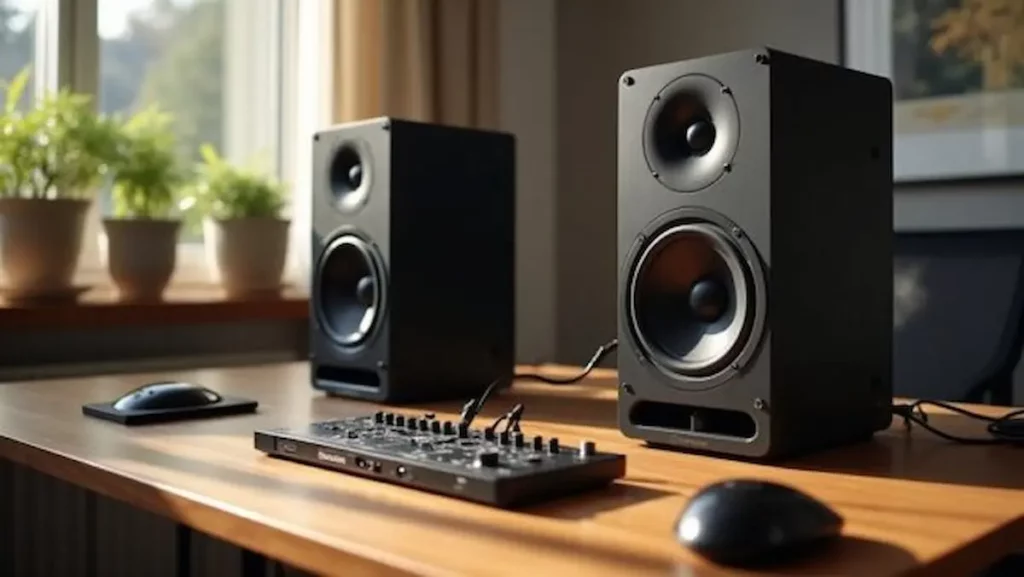
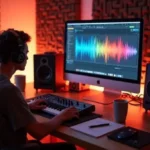
Choosing the right studio monitors is essential for anyone serious about audio quality in their tech or robotics projects. (Image:
Room size and acoustics play a crucial role in how your studio monitors perform. When choosing the best studio monitors, it’s important to consider your room size because smaller rooms often cause bass buildup and sound reflections that can muddy the audio.
On the other hand, larger rooms affect sound differently, spreading it out more.
By understanding your room size and acoustics, you can treat your space with absorptive or diffusive materials to improve sound quality.
Optimizing your room size and acoustics ensures your studio monitors deliver clear, accurate audio tailored to your unique workspace.
Understanding frequency response and sound accuracy
Frequency response is key to how studio monitors reproduce sound across different pitches. A good frequency response means the monitor can play low, mid, and high tones evenly, without boosting or cutting any part of the sound.
When studio monitors have a flat and wide frequency response, they deliver audio that stays true to the original recording, making your mixes sound balanced and clear.
Understanding frequency response helps you choose the right studio monitors for accurate sound, which is essential for professional audio work like mixing and mastering.
Choosing between active and passive monitors
Choosing between active and passive monitors is an important step when picking the best studio monitors for your setup.
Active monitors come with built-in amplifiers, making them easy to set up and perfect for users who want a straightforward solution.
On the other hand, passive monitors need external amplifiers, giving you more flexibility but requiring a bit more technical know-how.
When deciding on studio monitors, consider your comfort with technology and how you plan to integrate them into your system.
Whether you choose active or passive monitors, understanding these differences will help you get the best performance and ease of use from your studio monitors.
Considering monitor size and power output
When choosing the right monitor size and power output, room size and acoustic treatment play a big role. In larger rooms, bigger monitors with higher power output help deliver accurate sound projection.
On the other hand, smaller spaces work best with compact monitors that have lower power output to avoid overwhelming reflections.
Finding the perfect monitor size and power output balance ensures clear sound, accurate frequency response, and the right volume levels for mixing.
Evaluating connectivity options and compatibility
Evaluating connectivity options is essential when choosing the best studio monitors for your setup. After selecting the right monitor size and power output, it’s important to focus on the connectivity options that affect compatibility with your existing equipment.
Most studio monitors come with balanced XLR, TRS, or unbalanced RCA inputs.
Picking studio monitors with the right input types ensures smooth integration with your audio interfaces, mixers, or controllers.
This compatibility helps prevent signal loss and keeps your sound quality crystal clear.
Importance of monitor placement and isolation
Proper monitor placement and isolation are key to getting the best sound quality in any studio setup.
By placing your monitors at ear level and arranging them in an equilateral triangle with your listening position, you enhance stereo imaging for a more accurate audio experience.
Using isolation pads or stands helps reduce vibrations and stops unwanted sound coloring caused by surfaces.
Good monitor placement and isolation ensure you hear a clear and precise sound, which is crucial for making smart mixing and mastering decisions in tech-driven music production.
Budgeting for quality without overspending
Budgeting for quality studio monitors doesn’t mean you have to overspend. Finding the right studio monitors that deliver excellent sound quality at an affordable price is possible with some smart research.
When choosing studio monitors, focus on key features like accurate frequency response and low distortion to ensure you get the best value for your money.
Also, consider buying used or discontinued studio monitors, as these options often provide great performance without breaking your budget.
Conclusion
Choosing the right studio monitors is essential for anyone serious about audio quality in their tech or robotics projects. When selecting the right studio monitors, consider your room size, acoustics, and personal needs to get the best sound. The right studio monitors balance frequency response, size, and power to deliver accurate sound tailored to your environment. Don’t forget about connectivity options and proper placement, which can greatly improve performance. By focusing on these factors, you’ll enhance your setup for clearer, more precise monitoring—perfect for technology enthusiasts and professionals looking to boost their audio and production experience.