Published on October 5, 2025 at 4:00 PMUpdated on October 5, 2025 at 4:00 PM
As the global transition to sustainable transportation accelerates, the sight of electric vehicles (EVs) on our roads has become the new norm. By late 2025, global electric vehicle sales are projected to exceed 20 million units annually, a testament to our collective desire for cleaner air and reduced reliance on fossil fuels. However, this massive shift brings with it a significant environmental challenge: the management of lithium-ion batteries once they reach the end of their automotive life. While these batteries are the heart of the green revolution, their disposal requires a sophisticated, circular approach to ensure that the “green” promise of EVs is fully realized.
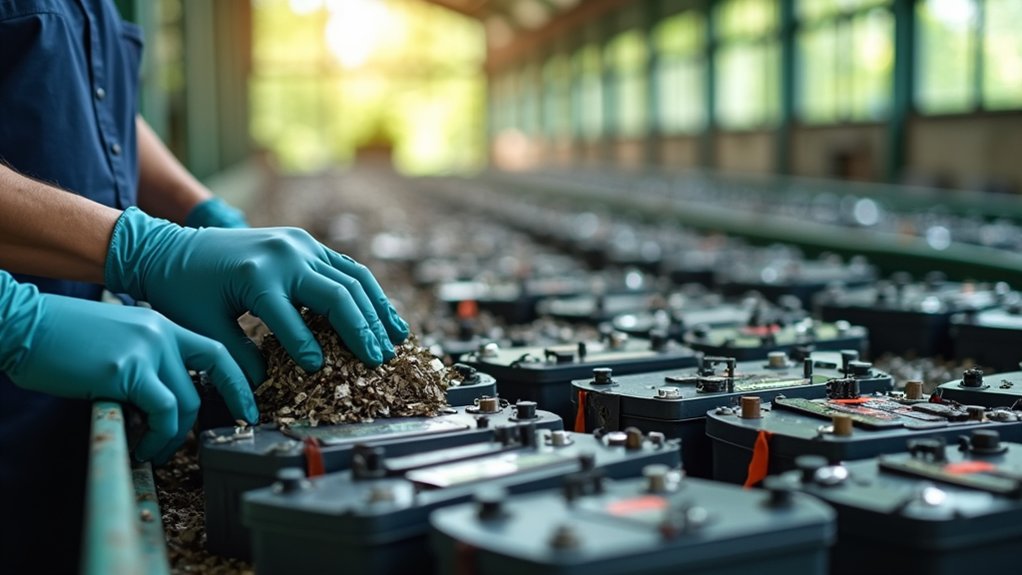
Best ways recycling electric car batteries (image: Abwavestech)
Recycling electric car batteries is no longer a niche industrial process; in 2025, it has become a cornerstone of environmental protection. From “urban mining” to advanced hydrometallurgical rejuvenation, the methods we use to recover battery materials are evolving rapidly. This process does much more than just keep trash out of sight; it fundamentally alters the carbon footprint of our technology and protects the very ecosystems we aim to save. Understanding the multifaceted benefits of this recycling cycle is essential for appreciating the true sustainability of the modern electric vehicle.
Preventing the Silent Threat: Eliminating Hazardous Waste in Landfills
One of the most immediate environmental benefits of recycling electric car batteries is the prevention of hazardous waste accumulation. A typical EV battery is a complex assembly of cells containing a variety of heavy metals and chemical electrolytes, including lead, nickel, cobalt, and lithium. If these batteries are improperly discarded in landfills, they do not simply sit dormant. Over time, the protective casings can corrode, leading to a phenomenon known as “leaching,” where toxic chemicals seep into the surrounding soil and groundwater.
In 2025, new environmental regulations in regions like the European Union and North America have officially classified “black mass”—the shredded material from recycled batteries—as hazardous waste to ensure it is handled with the utmost care. By diverting batteries into specialized recycling streams, we eliminate the risk of these toxins entering our local ecosystems. This prevents the contamination of agricultural land and drinking water supplies, protecting both wildlife and human health. Furthermore, proper recycling mitigates the risk of “landfill fires,” as lithium-ion batteries can become volatile if crushed or exposed to extreme heat in a traditional waste environment. Recycling ensures that these powerful energy storage devices are deactivated and dismantled in a controlled, safe manner.
Urban Mining: The New Frontier of Resource Conservation
Recycling electric car batteries is perhaps the most effective way to conserve the earth’s dwindling natural resources. We are currently witnessing the rise of “urban mining”—the practice of recovering valuable minerals from waste streams rather than extracting them from the earth. In 2025, a single recycled EV battery can provide up to 95% of its original minerals, such as lithium, cobalt, and nickel, to be used in the production of brand-new cells.
This closed-loop system is vital because traditional mining is one of the most ecologically destructive activities on the planet. Hard-rock lithium mining and cobalt extraction often involve massive land clearing, the destruction of indigenous habitats, and the consumption of billions of gallons of water. By recycling, we significantly reduce the “primary demand” for these minerals. Research from 2025 suggests that by 2040, recycling could meet 25% of global lithium demand and over 35% of cobalt and nickel demand. Every ton of lithium recovered from an old battery is a ton that doesn’t need to be pulled from a brine pool in the Andes or a mine in Australia, preserving the natural beauty and biodiversity of those regions for future generations.
Drastic Reductions in Greenhouse Gas Emissions
While electric cars emit zero tailpipe emissions, the process of manufacturing their batteries is energy-intensive. However, recycling offers a powerful “emissions shortcut.” When we recycle a battery to create a new one, we bypass the most carbon-heavy stages of the production cycle: mining, long-distance transport of raw ores, and high-heat refining.
Recent life-cycle analyses in 2025 have revealed that using recycled materials to manufacture a battery can emit between 58% and 81% fewer greenhouse gases compared to using virgin, mined metals. This is because the “reductive calcination” and hydrometallurgical processes used in modern recycling facilities operate at much lower temperatures and use significantly less electricity than traditional smelting. Furthermore, the transportation of recycled materials is often localized; while raw minerals might travel over 35,000 miles from a mine to a factory, recycled “black mass” often travels less than 200 miles to a nearby refining center. This massive reduction in “embodied carbon” makes the electric vehicle of 2025 significantly cleaner over its entire lifespan than it was just a decade ago.
Empowering the Circular Economy and Sustainable Manufacturing
The recycling of electric car batteries is the primary engine driving a new era of sustainable manufacturing. In 2025, the relationship between car manufacturers and recyclers has become deeply integrated. Companies like Redwood Materials and Li-Cycle are now building “closed-loop” facilities directly adjacent to battery “gigafactories.” This allows manufacturing scrap—the leftover material from the production process—to be instantly recycled and fed back into the assembly line.
This synergy supports sustainable manufacturing by creating a reliable, domestic supply of “battery-grade” precursors. It reduces the strain on global supply chains and insulates the industry from the geopolitical instability often associated with mineral mining. For the consumer, this means that the smartphone in your pocket or the laptop on your desk may soon contain cobalt or lithium that once powered an electric vehicle. This cross-industry resource sharing is the hallmark of a mature circular economy, where “waste” is no longer a concept, but rather a valuable input for the next generation of technology.
Combatting Global Pollution and Protecting Waterways
Beyond the prevention of landfill leaching, recycling plays a critical role in decreasing overall environmental pollution. Mining for battery minerals often results in “tailings”—vast piles of toxic waste rock that can cause acid mine drainage, turning local rivers and streams acidic and killing aquatic life. By transitioning to a recycling-heavy model, we reduce the volume of these mining byproducts globally.
Moreover, the advanced hydrometallurgical recycling methods preferred in 2025 use up to 88% less water than traditional mining and refining. In a world where water scarcity is an increasing concern, this conservation is a major environmental victory. Recycling facilities are also easier to monitor and regulate than sprawling, remote mines, ensuring that any emissions are filtered and processed according to strict air quality standards. The result is a cleaner manufacturing footprint that respects the local environment and ensures that the transition to clean energy does not come at the cost of our planet’s most precious liquid resource.
Conclusion
In conclusion, recycling electric car batteries is a fundamental pillar of modern environmental stewardship. By the end of 2025, it has become clear that the sustainability of the electric vehicle is inextricably linked to the efficiency of its end-of-life management. Every recycled battery represents a significant victory in the fight against climate change, hazardous waste, and habitat destruction. It is a process that turns a potential environmental liability into a sustainable asset, ensuring that the materials we use today are preserved for the innovations of tomorrow.
The impact of your decision to support EVs and their recycling programs cannot be overstated. By embracing this circular approach, we are not just cleaning our streets; we are protecting our soil, our water, and our atmosphere. As technology continues to improve, the efficiency of battery recycling will only increase, making the electric vehicles of the future even more environmentally friendly than they are today. Let us continue to view every spent battery not as waste, but as a seed for a cleaner, greener, and more resilient planet for all future generations.