

Innovation
How to complete your crypto transaction?
Start your crypto journey by mastering the first transaction—discover the crucial steps you can't afford to miss before making your move.


Elon Musk is one of the most recognizable names in the world. Most people associate him with Tesla’s electric cars or SpaceX’s reusable rockets—two technologies that have reshaped entire industries. But what many don’t realize is that Musk’s vision extends much further. Behind the scenes, he has launched and developed several other groundbreaking technologies that receive far less attention yet carry enormous potential. These Musk’s lesser-known technologies are quietly shaping our future in ways that might one day be even more transformative than electric vehicles or space travel.
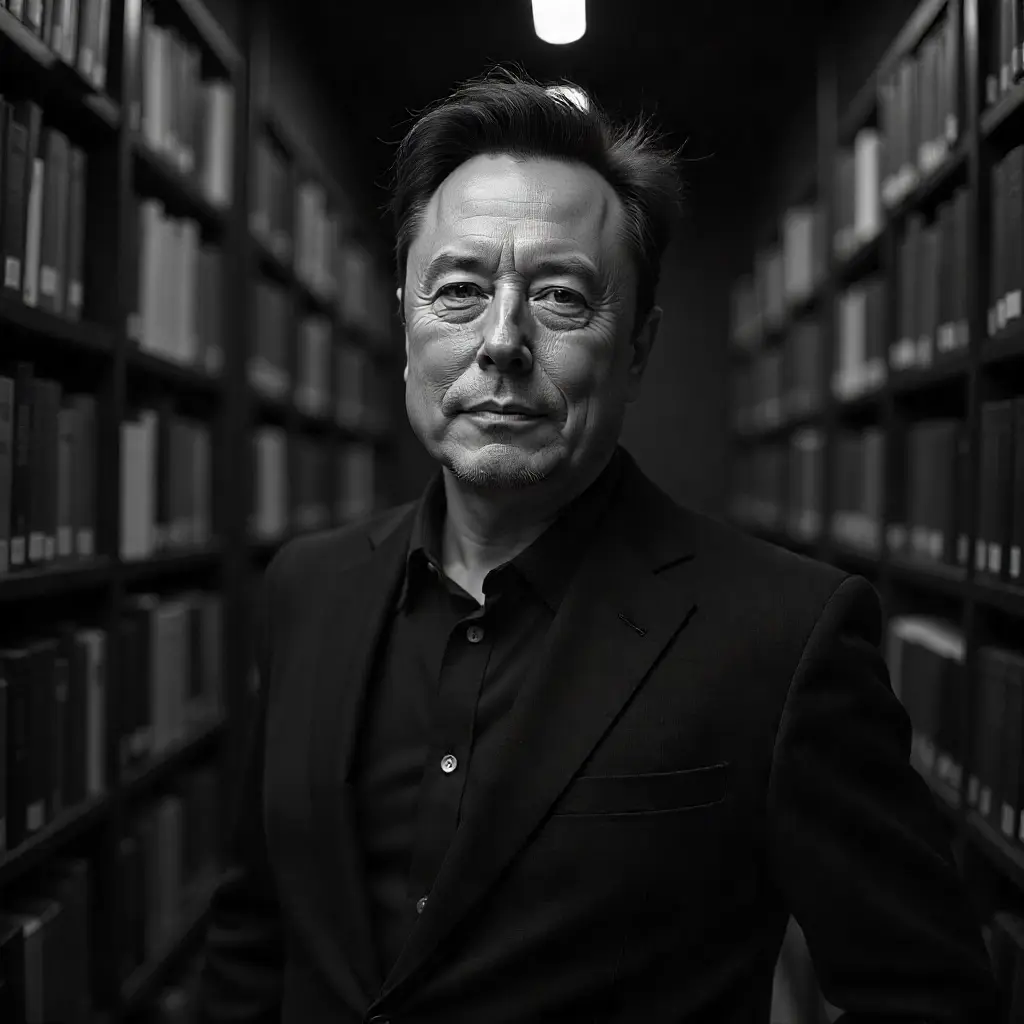
Below, we explore four of Musk’s most overlooked innovations, why they matter, and how they could dramatically influence global infrastructure, healthcare, communication, and even the future of humanity.
Starlink, a project under SpaceX, is more than just satellite internet—it’s a technological shift with global consequences. Its constellation of thousands of low-Earth-orbit satellites brings high-speed internet to places that traditional providers cannot reach. While many see Starlink as a tool for rural internet access, its true impact goes much deeper.
One major advantage of Starlink is its global reach. Traditional networks struggle to connect sensors in remote areas such as forests, oceans, or deserts. Starlink fills that gap.
Agricultural sensors can track soil moisture, temperature, and livestock movement. Logistics companies can monitor shipments across continents. Government agencies can receive instant alerts during natural disasters.
This real-time data connectivity represents a new era for IoT—one in which no region is “too remote” to be connected.
Ships, offshore platforms, and aircraft often rely on slow, expensive satellite connections. Starlink changes this dramatically.
Passenger flights become more efficient with real-time flight data. Cargo ships can communicate instantly, improving navigation and reducing accidents. Oil platforms, scientific expeditions, and research vessels gain access to fast, stable internet that allows for better operational planning and improved safety.
Perhaps Starlink’s most humanitarian benefit is its potential to provide affordable internet access worldwide. Billions of people still lack basic connectivity—a barrier that affects education, economic growth, healthcare access, and job opportunities.
Starlink aims to eliminate that divide. Schools in rural areas can access online learning. Small businesses can reach global markets. Telemedicine becomes possible even in remote regions.
In many ways, Starlink is not just a tech innovation—it is an equalizer.
Neuralink is Musk’s boldest and most futuristic company. It focuses on developing brain-computer interfaces (BCIs)—tiny implants that allow the human brain to communicate directly with computers. While it sounds like something from a sci-fi movie, the technology is real, and early tests have shown remarkable progress.
One of Neuralink’s main goals is medical.
People with paralysis, amputations, or severe neurological damage may regain control through Neuralink’s implant. A person could move a cursor, type messages, or control a robotic arm using only their thoughts.
In the future, advanced versions may reconnect neural pathways, allowing patients to regain mobility, sensation, or independence previously thought impossible. There is even early research into restoring vision and hearing by stimulating specific brain regions.
Neuralink’s technology could be revolutionary for treating conditions such as:
By monitoring and stimulating neural activity in real time, the device can help regulate abnormal brain patterns. This approach has far-reaching medical implications and could reshape how neurological disorders are treated.
Beyond medical applications, Musk envisions a long-term, philosophical goal:
to create a symbiotic relationship between humans and artificial intelligence.
A brain-computer interface could allow humans to keep up with rapidly advancing AI systems. Instead of competing with machines, we might collaborate with them directly—sharing information, enhancing cognition, and unlocking new capabilities.
If successful, Neuralink could mark the beginning of a new era of human evolution.
Traffic congestion is a universal problem, and Musk believes the solution lies underground. That’s the mission of The Boring Company (TBC). While many people treat TBC as a side project or even a joke, it is actually a highly innovative engineering venture with huge potential.
TBC is working on cost-efficient tunneling technologies that are crucial for the development of systems like:
These tunneling methods are far cheaper and faster than traditional tunnel construction. The company has already demonstrated working versions in Las Vegas, where autonomous Teslas transport passengers through underground tunnels.
Compared to subways, tunnels built with TBC’s technology require less space, are faster to construct, and can be expanded in multiple layers.
Beyond transportation, TBC’s tunneling innovations can reshape how cities manage infrastructure.
Utility tunnels can house:
Building these networks underground is safer, cleaner, and more resilient during storms and disasters. Lower construction costs mean cities can modernize faster and more efficiently.
Tesla’s Dojo is one of the most advanced supercomputers ever created. While it’s known mainly for training Tesla’s self-driving car neural networks, its capabilities extend far beyond autonomous driving.
Dojo can process enormous amounts of visual and sensor data faster than traditional supercomputers. This means robots, autonomous machines, and AI systems can learn more quickly and with much greater accuracy.
It represents a new generation of AI training that pushes the limits of what machines can understand.
Dojo’s computing power could transform industries such as:
By training AI models faster, scientists can run simulations, test hypotheses, and discover new solutions at an unprecedented pace. AI-driven research powered by Dojo may unlock breakthroughs that would take humans decades to achieve manually.
The public focuses heavily on Musk’s headline-grabbing companies like Tesla and SpaceX. But Musk’s lesser-known technologies—Starlink, Neuralink, The Boring Company, and Dojo—represent entirely new frontiers.
These aren’t just incremental improvements. They are transformative technologies capable of:
Understanding them gives us a clearer picture of the future Musk is building—one in which technology, humanity, and innovation merge to create possibilities we can barely imagine today.


Isabela Souza is an administration professional specializing in operational efficiency and the logic of digital systems. With a highly analytical mindset, she focuses on deconstructing complex technical data into well-structured and actionable information. At ABWavesTech, Isabela applies her expertise in management to organize intricate tech trends and guides, ensuring that readers have access to clear, precise, and reliable insights to help them navigate the modern digital ecosystem.
Start your crypto journey by mastering the first transaction—discover the crucial steps you can't afford to miss before making your move.

Unlock the secrets of seamless cryptocurrency transactions—understand every crucial step before you risk your first coin. Discover what most beginners miss.

Here are the most secure platforms to buy cryptocurrency online—discover which one keeps your assets safest before you make your next move.
Unlock the secrets to easily transforming your digital art into tokens—discover what you need to know before making your first move.
Premium digital collectibles aren’t always easy to spot—prepare to discover five expert tips that could change the way you collect forever.

From energy-hungry blockchains to surprising climate costs, find out how NFTs could be shaping our planet’s future in unexpected ways.